
Quick and Easy Quiche Recipe
Introduction
A perfect Quiche Recipe delivers a buttery, flaky crust cradling a rich, custardy filling that’s endlessly adaptable. This version, honed through countless weekend brunches, is your foolproof guide to a savory masterpiece. I’ve found that the key to a non-watery, perfectly set quiche lies in balancing your dairy and add-ins, a technique that ensures a sliceable result every time.
Ingredients
The beauty of this quiche recipe is its flexibility, but starting with quality base ingredients guarantees a creamy, flavorful custard. Fresh eggs and full-fat dairy create the ideal texture.
- 1 deep dish frozen pie crust (9-inch)
- 4 large eggs
- 1 cup milk or half and half
- 1 to 1½ cups shredded cheese (cheddar, mozzarella, Swiss - whatever your fridge offers)
- ½ to 1 cup of add-ins (bacon, sausage, chopped veggies, ham, last night’s roasted broccoli - you name it)
Timing
| Prep Time | 15 minutes |
| Cook Time | 45-55 minutes |
| Total Time | 60-70 minutes |
Context: Unlike recipes requiring a from-scratch crust. The active time is minimal, with the oven doing most of the work, perfect for a relaxed weekend brunch or easy dinner.
Step-by-Step Instructions
Step 1 - Prep the Crust
Preheat your oven to 375°F (190°C). Place the frozen pie crust on a baking sheet - this makes handling easier and catches any drips. For a crispier bottom crust, I recommend a quick 5-minute pre-bake (blind bake) before adding the filling.
Step 2 - Prepare Add-Ins
If using raw vegetables like onions or mushrooms, sauté them in a pan until softened to release moisture. For proteins like bacon or sausage, cook them fully and drain excess grease. This crucial step prevents a soggy quiche by removing water before baking.
Step 3 - Layer the Fillings
Sprinkle your shredded cheese evenly over the bottom of the crust. Then, distribute your prepared add-ins over the cheese. This layering technique helps bind the fillings and prevents them from sinking.
Step 4 - Whisk the Custard Base
In a large bowl, vigorously whisk the 4 large eggs until uniform. Gradually whisk in the milk or half and half until the mixture is completely smooth and pale yellow. Season generously with salt and pepper. (Pro tip: Whisking thoroughly here is essential for a silky, non-grainy custard texture).
Step 5 - Assemble the Quiche
Slowly pour the egg custard mixture over the fillings in the crust. Gently tilt the pan to ensure the custard seeps into all the gaps. Leave about ¼-inch space from the rim to prevent overflow during baking.
Step 6 - Bake to Perfection
Carefully transfer the baking sheet to the preheated oven. Bake for 45-55 minutes. The quiche is done when the edges are puffed and golden brown, and the center jiggles slightly but is no longer liquid. A knife inserted near the center should come out clean.
Step 7 - Cool and Serve
Let the quiche rest on a wire rack for at least 15-20 minutes before slicing. This resting period, a critical step often skipped, allows the custard to fully set, making for clean, beautiful slices. Serve warm or at room temperature.
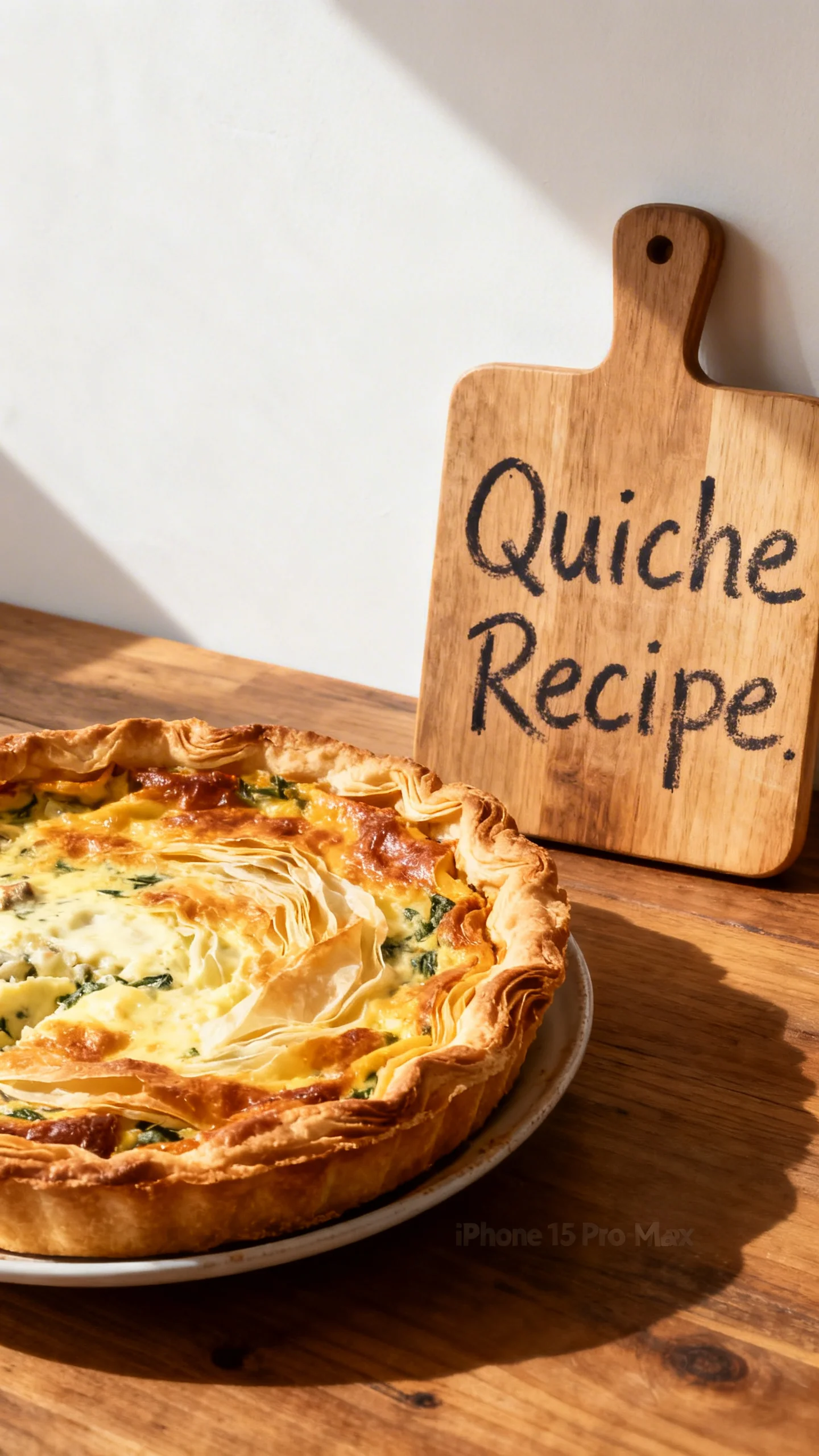
This quiche recipe is a good source of protein and calcium, primarily from the eggs and dairy.
Healthier Alternatives
- Swap whole milk for unsweetened almond milk - Cuts calories and saturated fat while maintaining a creamy custard base.
- Use a blend of whole eggs and egg whites - Reduce cholesterol; using two whole eggs and four whites maintains richness.
- Opt for low-fat cheese or reduce the quantity - Melts beautifully and still provides flavor without excess fat.
- Choose lean proteins like turkey sausage or diced chicken breast - Offers high protein with less saturated fat than bacon.
- Load up on non-starchy vegetables like spinach, mushrooms, and bell peppers - Adds volume, fiber, and nutrients for minimal calories.
- Make a crustless quiche - A popular low-carb and gluten-free option that simplifies the recipe.
- Season generously with herbs instead of salt - Fresh thyme, chives, or a pinch of red pepper flakes boost flavor for a lower-sodium dish.
Serving Suggestions
- For a classic brunch, pair a slice with a simple arugula salad dressed with lemon vinaigrette.
- Serve warm or at room temperature with a side of fresh fruit like melon or berries for a bright contrast.
- Transform leftovers into a quick lunch by serving a wedge with a cup of tomato soup.
- For a heartier dinner, accompany the quiche with roasted potatoes or a crusty baguette.
- Elevate your plating by garnishing with fresh chopped chives, parsley, or a sprinkle of paprika.
- Pair with a crisp white wine like Sauvignon Blanc or a sparkling mimosa for a celebratory meal.
- This versatile dish is perfect for potlucks, baby showers, or holiday mornings, as it travels well and serves a crowd.
Meal-prep enthusiasts find that a homemade quiche is an ideal make-ahead centerpiece. You can bake it on Sunday and enjoy quick, satisfying slices all week, adapting sides based on the season.
Common Mistakes to Avoid
- Mistake: Adding raw, wet vegetables to the filling. Fix: Always sauté or roast veggies first to drive off excess moisture, as outlined in Step 2, preventing a soggy crust.
- Mistake: Overfilling the crust with custard. Fix: Leave a ¼-inch gap from the rim to account for puffing and avoid messy oven spills.
- Mistake: Under-whisking the egg and dairy mixture. Fix: Whisk vigorously until completely smooth and homogenous to ensure a silky, not grainy, texture.
- Mistake: Skipping the resting time after baking. Fix: Let the quiche cool for at least 15-20 minutes so the custard can fully set for clean slices.
- Mistake: Using a cold, straight-from-the-fridge pie crust. Fix: Thaw the frozen crust slightly or pre-bake it briefly to help it cook evenly and stay flaky.
- Mistake: Overbaking until the center is completely firm. Fix: Remove the quiche when the edges are set and the center has a slight, gentle jiggle - it will firm up as it cools.
- Mistake: Crowding the filling with too many heavy add-ins. Fix: Stick to about 1 to 1.5 cups total; overloading can weigh down the custard and prevent proper cooking.
Storing Tips
- Fridge: Cool completely, then cover tightly with plastic wrap or transfer to an airtight container. Store for up to 4 days. In my tests, the texture and flavor hold best within this window.
- Freezer: Wrap cooled, whole quiche or individual slices tightly in plastic wrap and then aluminum foil. Freeze for up to 3 months.
- Reheat: For best results, thaw overnight in the fridge if frozen. Reheat slices in a 325°F (160°C) oven for 15-20 minutes or until warmed through to an internal temperature of 165°F (74°C), as per USDA guidelines. Avoid the microwave, which can make the crust soggy.
This quiche recipe is a meal-prep champion. Baking and storing a whole quiche provides ready-made, high-protein meals that simply need reheating, saving significant time on busy weekdays.
Conclusion
This quiche recipe is your ultimate template for a savory, satisfying meal that works for any time of day. Its true strength lies in its foolproof adaptability - once you master the custard ratio, you can create endless variations from your fridge. For another simple, protein-packed breakfast idea, try the Baked Feta Eggs Recipe. Give this recipe a try and share your favorite filling combination in the comments!
Frequently Asked Questions
How many servings does this quiche recipe make?
A standard 9-inch quiche yields 6 generous slices. This serving size is based on the deep-dish crust and rich custard, making it a satisfying main course. For a larger crowd, you can easily double the recipe and bake it in two separate pie dishes, adjusting the bake time as needed.
Can I use heavy cream instead of milk in this quiche?
Yes, heavy cream is an excellent substitute that creates an exceptionally rich and velvety custard. Unlike milk, heavy cream has a higher fat content, which results in a denser, more luxurious texture. For the best balance, I often use a half-and-half blend, but using all heavy cream will produce a decadent, restaurant-style quiche.
Why did my quiche turn out rubbery or tough?
A rubbery texture is typically caused by overbaking or overheating the custard. This happens because the proteins in the eggs coagulate too tightly. The best approach is to remove the quiche from the oven when the center still has a slight jiggle, as it will continue to set during the crucial resting period mentioned in Step 7. Using a reliable oven thermometer to ensure accurate temperature also helps prevent this issue.
PrintQuick and Easy Quiche


Ingredients
- 1 deep dish frozen pie crust (9-inch)
- 4 large eggs
- 1 cup milk or half and half
- 1 to 1½ cups shredded cheese (cheddar, mozzarella, Swiss - whatever your fridge offers)
- ½ to 1 cup of add-ins (bacon, sausage, chopped veggies, ham, last night’s roasted broccoli - you name it)
Instructions
- Pre-heat your oven to 400 degrees.
- Combine dry ingredients in a bowl and then pour into frozen pie dish
- Combine eggs and half & half / milk.
- Pour egg mixture into pie dish.
- Bake for 15 minutes.
- Lower oven temperature to 350 and bake for 35-40 more minutes
You Might Also Like
- Creamy Greek Yogurt Egg Bites Recipe
- Best Sausage, Egg, and Cream Cheese Hashbrown Casserole
- Easy Sausage, Egg, and Cheese Bisquick Muffins Ready in 30 Minutes
Get our 10 best recipes - free
Join the The Cooking Journal newsletter and we’ll email you our 10 most-loved recipes as a free PDF.
Free PDF + new recipes every week. Unsubscribe anytime.