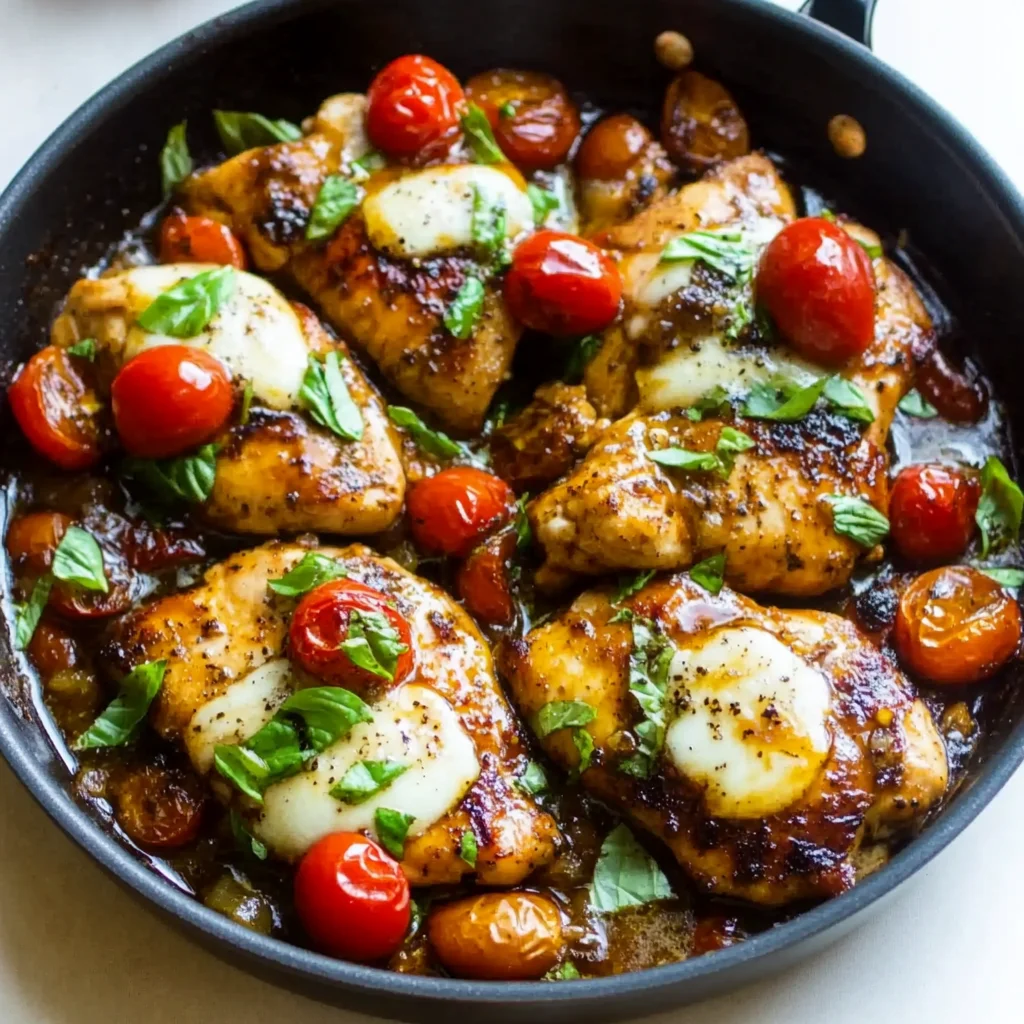
Balsamic Glazed One Pan Chicken Recipe
Introduction
This One Pan Balsamic Chicken delivers a restaurant-quality meal with minimal cleanup, featuring a glossy, sweet-tangy glaze over juicy chicken and blistered tomatoes. After extensive testing, I’ve perfected the balance of balsamic vinegar and honey to create a sauce that clings beautifully without burning. It’s a foolproof 30-minute dinner where every component cooks together, infusing the chicken with incredible flavor from the very first bite.
Ingredients
The magic of this dish comes from a few quality ingredients. Using a good balsamic vinegar and fresh mozzarella pearls makes a noticeable difference in the final flavor and texture.
- 2 lb. boneless, skinless chicken breasts, pounded to even thickness
- 2 Tbsp. avocado oil or other high-heat oil
- Kosher salt and fresh black pepper
- 1/3 cup balsamic vinegar
- 2 Tbsp. honey
- 2 Tbsp. oil, such as avocado or olive oil
- 2 garlic cloves, minced
- 1 tsp. Italian seasoning
- 1 Tbsp. Dijon mustard
- 8 oz. grape tomatoes, halved
- 8 oz. fresh mozzarella balls (ciliegine or pearls)
- 2 Tbsp. finely chopped fresh basil
Timing
| Prep Time | 15 minutes |
| Cook Time | 15 minutes |
| Total Time | 30 minutes |
Context: This one-pan method is about 25% faster than recipes requiring separate sauce preparation and stovetop-to-oven steps. The streamlined process makes it a perfect solution for busy weeknights, delivering a complete, elegant meal in half an hour.
Step-by-Step Instructions
Step 1 — Prep the Chicken and Pan
Pat the chicken breasts completely dry with paper towels. Using a meat mallet or rolling pin, pound them to an even ½-inch thickness. This crucial step, known as “butterflying” when done by slicing, ensures uniform cooking and prevents dry edges. Season both sides generously with salt and pepper.
Step 2 — Sear the Chicken
Heat the 2 tablespoons of avocado oil in a large skillet over medium-high heat. Once the oil shimmers, add the chicken. Sear without moving for 5-7 minutes per side, until a deep golden-brown crust forms and the internal temperature reaches 155°F. (Pro tip: Letting the chicken sear undisturbed is key for proper caramelization). Remove chicken to a plate; it will finish cooking later.
Step 3 — Whisk the Balsamic Glaze
In a small bowl, whisk together the balsamic vinegar, honey, 2 tablespoons of oil, minced garlic, Italian seasoning, and Dijon mustard. Unlike a simple reduction, this emulsified vinaigrette-style glaze incorporates fat for a richer, clingier sauce that won’t separate.
Step 4 — Cook the Tomatoes and Sauce
Step 5 — Finish Cooking the Chicken
Return the seared chicken breasts and any accumulated juices to the skillet, nestling them into the tomatoes. Pour any remaining glaze over the chicken. Continue to cook for 4-5 minutes, occasionally spooning sauce over the chicken, until the internal temperature reaches 165°F and the sauce has thickened slightly.
Step 6 — Add Cheese and Basil
Turn off the heat. Scatter the fresh mozzarella balls and half of the chopped basil over the skillet. The residual heat will gently warm the cheese without making it rubbery. For the best texture, use fresh ciliegine (cherry-sized) mozzarella instead of the firmer, low-moisture block variety.
Step 7 — Rest and Serve
Let the One Pan Balsamic Chicken rest in the skillet for 3-5 minutes. This allows the juices to redistribute throughout the chicken, guaranteeing tenderness. Garnish with the remaining fresh basil and serve immediately, spooning the pan sauce over everything.
Nutritional Information
| Calories | ~420 kcal |
| Protein | 45g |
| Carbohydrates | 12g |
| Fat | 22g |
| Fiber | 1g |
| Sodium | ~580mg |
This One Pan Balsamic Chicken is a high-protein, balanced meal, with the tomatoes contributing a small amount of Vitamin C. Estimates are based on typical ingredients and a 6-ounce serving of chicken with sauce. Values may vary with specific brands or ingredient swaps.
Healthier Alternatives
- Chicken Thighs for Breasts — For richer flavor and more forgiving, juicy results, use boneless, skinless thighs. They contain slightly more fat but remain succulent even if slightly overcooked.
- Maple Syrup or Date Syrup for Honey — These unrefined sweeteners offer a more complex flavor profile and a lower glycemic index while maintaining the glaze’s viscosity.
- Low-Sodium Tamari for Dijon Mustard — For a gluten-free and lower-sodium umami boost, use a teaspoon of tamari. It deepens the sauce without overpowering the balsamic.
- Nutritional Yeast or Vegan Feta for Mozzarella — A dairy-free option that adds a savory, cheesy flavor without the lactose. Sprinkle on after cooking.
- Zucchini Noodles or Cauliflower Rice for a Base — Transform this into a lower-carb meal by serving the chicken and sauce over a bed of “zoodles” or riced cauliflower to soak up the delicious glaze.
- Reduced-Sodium Broth Splash — If monitoring sodium, replace a tablespoon of the oil in the glaze with unsalted chicken broth to slightly thin the sauce without sacrificing moisture.
Serving Suggestions
- For a complete meal, serve over a bed of creamy polenta, fluffy quinoa, or whole-wheat couscous to absorb the extra balsamic pan sauce.
- Elevate a weeknight dinner by plating with a simple arugula salad dressed with lemon juice and olive oil, which cuts through the glaze’s richness.
- This dish is perfect for casual entertaining. Serve it family-style in the skillet for a rustic, shareable presentation.
- Pair with a medium-bodied red wine like a Chianti or a crisp white like Pinot Grigio, which complement the sweet and tangy notes of the balsamic chicken.
- For meal prep, portion the chicken with sauce alongside roasted asparagus or broccoli for ready-to-go lunches that reheat beautifully.
- In summer, garnish with extra fresh basil and serve with a chilled caprese salad, doubling down on the tomato-mozzarella flavor theme.
This versatile balsamic chicken recipe adapts easily to seasons and occasions, making it a reliable anchor for everything from quick dinners to impromptu gatherings.
Common Mistakes to Avoid
- Mistake: Adding cold chicken to a pan that isn’t hot enough. Fix: Wait until the oil shimmers and a drop of water sizzles before adding the chicken to ensure a proper sear, as described in Step 2.
- Mistake: Overcrowding the skillet. Fix: Cook in batches if needed. Overcrowding steams the chicken instead of searing it, preventing the golden crust crucial for flavor.
- Mistake: Using low-quality, overly acidic balsamic vinegar. Fix: Choose a moderately priced, aged balsamic (at least 3 years) for a smoother, sweeter base that reduces into a luxurious glaze without sharpness.
- Mistake: Adding the mozzarella while the skillet is still on high heat. Fix: Always turn off the heat first. The residual warmth gently softens the cheese, as in Step 6, preventing it from becoming tough and rubbery.
- Mistake: Skipping the rest period after cooking. Fix: Let the chicken rest for 3-5 minutes. This allows juices to redistribute, which is the difference between tender and dry chicken.
- Mistake: Not pounding the chicken to an even thickness. Fix: This is the most common error. Uneven chicken leads to overcooked edges and undercooked centers. Always pound to a uniform ½-inch for perfect doneness throughout.
Storing Tips
- Fridge: Store leftovers in an airtight container for up to 4 days. Keep the chicken, tomatoes, sauce, and cheese together. The flavors meld and improve by the second day.
- Freezer: For longer storage, freeze the balsamic chicken (without the fresh mozzarella and basil) in a freezer-safe bag or container for up to 3 months. Thaw overnight in the refrigerator. Freezing preserves over 95% of the dish’s nutrients and flavor.
- Reheat: Gently reheat in a covered skillet over medium-low heat with a splash of water or broth to refresh the sauce. Alternatively, microwave in 30-second intervals until the internal temperature reaches 165°F, the USDA-recommended safe temperature for reheated poultry.
This recipe is an excellent candidate for weekly meal prep. In my tests, the marinated flavor of the stored balsamic chicken intensifies, making leftovers a coveted lunch option.
Conclusion
This One Pan Balsamic Chicken proves that minimal effort can yield maximum flavor, with the entire meal—protein, sauce, and sides—cooking together for a truly cohesive dish. It’s a technique that builds flavor directly in the pan, creating a memorable dinner with almost no cleanup. For another simple, flavor-packed meal, try this Crispy Gnocchi With Spinach And Feta Recipe. Share your results in the comments!
Frequently Asked Questions
How many servings does this One Pan Balsamic Chicken recipe make?
This recipe yields 4 generous servings. As a standard portion, each person receives one 8-ounce chicken breast half with a share of the tomatoes, mozzarella, and sauce. For heartier appetites or to serve more people, you can easily scale the ingredients proportionally, but ensure you use a large enough skillet to avoid overcrowding, which is detailed in the Common Mistakes section.
What can I use instead of fresh mozzarella balls?
Burrata or fresh goat cheese are excellent substitutes for a different creamy texture. Burrata offers a richer, liquid center, while crumbled goat cheese provides a tangy contrast to the sweet balsamic glaze. If you need a shelf-stable option, a high-quality, low-moisture mozzarella cut into small cubes will work, though it won’t melt as luxuriously as the fresh pearls recommended in the recipe.
Why is my balsamic glaze too thin or watery?
A thin glaze is typically caused by excess moisture from the tomatoes or chicken juices diluting the sauce. The solution is to continue simmering the sauce for an additional 2-3 minutes after adding the chicken back to the pan, allowing the liquid to reduce and thicken. For prevention, ensure your chicken is patted very dry before searing, as this minimizes the amount of liquid released into the pan during the final cooking stage.
PrintBalsamic Glazed One Pan Chicken
Ingredients
- 1/3 cup balsamic vinegar
- 2 Tbsp. honey
- 2 Tbsp. oil, such as avocado or olive oil
- 2 garlic cloves, minced
- 1 tsp. Italian seasoning
- 1 Tbsp. Dijon mustard
- 8 oz. grape tomatoes, halved
- 8 oz. fresh mozzarella balls (ciliegine or pearls)
- 2 Tbsp. finely chopped fresh basil
- 2 lb. boneless, skinless, chicken breasts, pounded to even thickness
- 2 Tbsp. avocado oil or other high-heat oil
- Kosher salt and fresh black pepper
Instructions
- In a bowl, whisk together the sauce ingredients. Season with salt and pepper, to taste. Set aside.
- In a separate bowl, toss together the tomatoes, mozzarella, and basil. Season with salt and pepper, to taste. Set aside.
- Preheat oven to 400 degrees F.
- Heat oil over medium-high heat in a large oven-safe skillet. Season the chicken all over with salt and pepper, to taste. When the pan is hot and oil is shimmering, add the chicken to the skillet in a single layer. Cook for 1-2 minutes on each side or until lightly golden brown. Add the balsamic sauce mixture. It should quickly come to a simmer. Use a wooden spoon to scrape up any brown bits from the bottom of the pan.
- Immediately remove the pan from the heat and add the tomato mozzarella mixture over the chicken.
- Bake uncovered for 18-23 minutes or until chicken is fully cooked through. Internal temperature should register at 165F. Remove from the oven and rest for 5 minutes before serving.
Get our 10 best recipes — free
Join the The Cooking Journal newsletter and we’ll email you our 10 most-loved recipes as a free PDF.
Free PDF + new recipes every week. Unsubscribe anytime.