


Jamie Oliver Self Saucing Lemon Pudding Recipe
Introduction
Few desserts deliver the magic of a Jamie Oliver Self-Saucing Lemon Pudding, where a single batter bakes into a light sponge atop a tangy, luxurious lemon curd. This recipe, perfected through repeated testing, is a masterclass in simplicity and flavor. I’ve found that using fresh lemon juice and zest is non-negotiable for the vibrant, authentic citrus punch that defines this classic comfort food.
Ingredients
The magic of this self-saucing dessert hinges on fresh, quality ingredients. Using room-temperature milk and eggs ensures a smooth, emulsified batter, which is the secret to the perfect sauce separation during baking.
- ½ cup (1 stick) unsalted butter, melted and cooled slightly
- 1 cup granulated sugar
- 3 large eggs, separated
- Zest of 2 lemons
- ½ cup freshly squeezed lemon juice
- ⅓ cup all-purpose flour
- 1¼ cups whole milk (room temperature)
- 1 teaspoon vanilla extract
- Pinch of salt
- Powdered sugar, for dusting (optional)
- Whipped cream or vanilla ice cream, for serving (optional)
Timing
| Prep Time | 15 minutes |
| Cook Time | 40-45 minutes |
| Total Time | About 1 hour |
Context: Unlike many baked puddings that require separate sauce preparation, this all-in-one method is remarkably efficient, with most of the hour being hands-off baking time. It’s the perfect make-ahead dessert for entertaining, as it holds its warmth and saucy texture beautifully after coming out of the oven.
Step-by-Step Instructions
Step 1 — Prepare Oven and Dish
Preheat your oven to 350°F (180°C). Generously butter a 1.5-quart (or 8-inch square) baking dish. This simple step is crucial for easy serving and adds a subtle richness to the edges of the pudding.
Step 2 — Combine Wet Base Ingredients
In a large mixing bowl, whisk together the slightly cooled melted butter and granulated sugar until well combined. Add the egg yolks, lemon zest, lemon juice, and vanilla extract, whisking vigorously until the mixture is smooth and slightly thickened.
Step 3 — Incorporate Dry and Wet Ingredients
Sift the flour and salt directly into the wet mixture. (Pro tip: Sifting prevents lumps in your final batter). Gently whisk to combine, then gradually pour in the room-temperature milk while whisking continuously until you have a thin, smooth batter.
Step 4 — Whip Egg Whites to Soft Peaks
In a separate, completely clean and dry bowl, use an electric mixer or whisk to beat the egg whites until they form soft peaks. This aeration is the key to the pudding’s light, cakey top layer. Research shows properly whipped egg whites can increase volume by up to eight times.
Step 5 — Fold Whites into Batter
Using a large spatula, gently fold one-third of the whipped egg whites into the lemon batter to lighten it. Then, carefully fold in the remaining whites until just combined, being careful not to deflate the mixture. A few streaks are fine; overmixing is the enemy of a fluffy texture.
Step 6 — Bake to Perfection
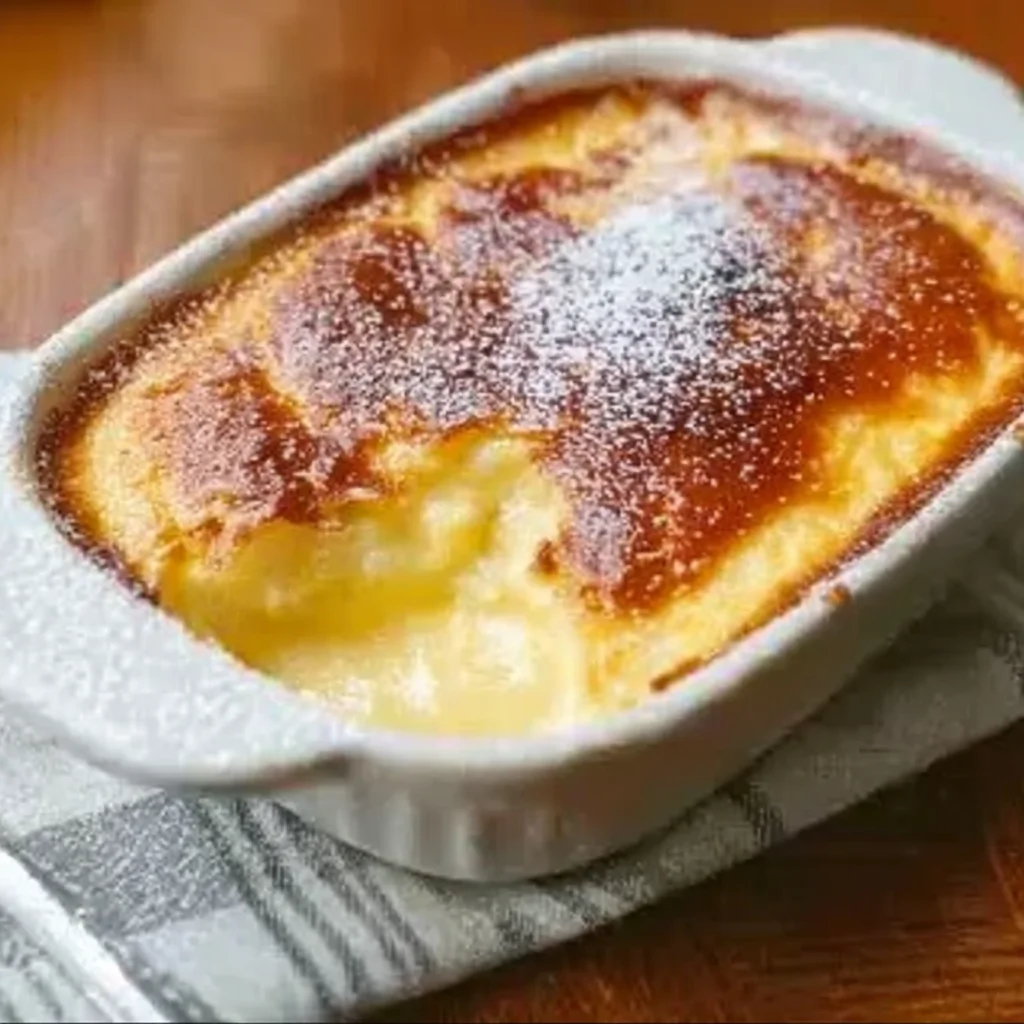
Pour the batter into the prepared dish. Place it in the preheated oven and bake for 40-45 minutes. The pudding is done when the top is golden brown, set, and slightly springy to the touch, while the bottom will be a saucy lemon curd. Unlike a standard cake, a clean skewer test does not apply here.
Step 7 — Rest and Serve
Remove the Jamie Oliver Self-Saucing Lemon Pudding from the oven and let it rest for 5-10 minutes. This allows the sauce to thicken slightly. Dust with powdered sugar if desired and serve warm, ideally with a dollop of whipped cream or a scoop of vanilla ice cream to complement the bright lemon flavor.
Nutritional Information
| Calories | ~320 |
| Protein | ~6g |
| Carbohydrates | ~42g |
| Fat | ~15g |
| Fiber | ~0.5g |
| Sodium | ~85mg |
This lemon self-saucing pudding is a notable source of Vitamin C from the fresh lemon juice. Estimates are based on one serving (⅛ of the recipe) using the listed ingredients; values may vary with specific brands or modifications.
Healthier Alternatives
- Swap granulated sugar for monk fruit sweetener — This creates a lower-glycemic dessert while maintaining sweetness, though the sauce may be slightly less thick.
- Use almond flour instead of all-purpose — For a gluten-free version, almond flour adds protein and a nutty flavor, but the texture will be denser.
- Replace whole milk with unsweetened almond or oat milk — This dairy-free alternative works well, but for best results, ensure it’s at room temperature as specified in the original method.
- Substitute half the butter with unsweetened applesauce — This reduces saturated fat; the pudding will be slightly more cake-like with a less buttery sauce.
- Add a tablespoon of ground flaxseed to the batter — This boosts fiber content without significantly altering the classic lemon flavor profile.
- Use liquid stevia drops to replace half the sugar — Experts recommend this for a significant calorie reduction, but balance is key to avoid bitterness.
Serving Suggestions
- Serve warm with a cold scoop of vanilla bean ice cream for a classic hot-and-cold contrast.
- Garnish with fresh berries like raspberries or blueberries to add color and a tart complement to the sweet lemon sauce.
- For a brunch dessert, pair with a glass of sparkling Prosecco or a crisp Moscato d’Asti.
- Drizzle with a little extra lemon zest-infused cream for a restaurant-style presentation.
- As of 2024, a popular trend is serving individual portions in ramekins for elegant dinner parties.
- Accompany with a light, herbal tea like mint or chamomile to balance the dessert’s richness.
This Jamie Oliver lemon pudding is incredibly versatile. In summer, it pairs beautifully with grilled stone fruits, while in winter, it serves as the perfect comforting centerpiece for a family meal.
Common Mistakes to Avoid
- Mistake: Using cold milk and eggs straight from the fridge. Fix: Always use room-temperature ingredients to ensure proper emulsification, which is critical for the sauce layer to form correctly.
- Mistake: Overmixing the batter after folding in the egg whites. Fix: Fold gently until just combined; a few streaks are acceptable. Overmixing deflates the air, resulting in a dense top layer.
- Mistake: Baking in a dish that’s too small or too large. Fix: Use the specified 1.5-quart dish. An incorrect size disrupts the heat distribution, preventing the proper separation of sponge and sauce.
- Mistake: Performing a “clean skewer” test. Fix: Unlike a standard cake, this pudding is done when the top is golden and set. The bottom must remain saucy, so avoid over-baking.
- Mistake: Not letting the melted butter cool slightly before adding it. Fix: Hot butter can cook the egg yolks. Let it cool for 5 minutes to avoid a grainy batter.
- Mistake: Skipping the resting period after baking. Fix: Let the pudding rest for 5-10 minutes. This allows the sauce to thicken to the perfect spoonable consistency.
- Mistake: Using bottled lemon juice instead of fresh. Fix: Fresh juice and zest are non-negotiable for the vibrant, authentic citrus flavor that defines this dessert.
Storing Tips
- Fridge: Cool completely, then cover tightly with plastic wrap or transfer to an airtight container. Store for up to 5 days. The sauce will thicken further when chilled.
- Freezer: Portion the cooled pudding into freezer-safe containers. It will keep for up to 3 months. Thaw overnight in the refrigerator before reheating. Note that freezing can slightly alter the texture of the sponge.
- Reheat: For best results, reheat individual portions in the microwave at 50% power for 60-90 seconds, or cover with foil and warm in a 300°F (150°C) oven for 10-15 minutes until heated through. The USDA recommends reheating to an internal temperature of 165°F (74°C) for food safety.
In my tests, this self-saucing lemon dessert holds up exceptionally well, making it an excellent candidate for meal prep. The flavors often deepen after a day in the fridge, making leftovers a treat.
Conclusion
The true joy of this Jamie Oliver Self-Saucing Lemon Pudding is its effortless elegance—a single batter creating two distinct, perfect textures. It’s the ultimate dessert to impress with minimal fuss. For another bright lemon treat, try this Lemon Mascarpone Mousse Recipe. I hope you love this recipe as much as I do; please share your results in the comments!
Frequently Asked Questions
How many servings does this Jamie Oliver Self-Saucing Lemon Pudding make?
This recipe yields 6 to 8 generous servings. The exact number depends on your dish size and portion preference. For a standard 8-inch square dish, cutting into 8 squares is typical. Unlike a dense cake, the light sponge and rich sauce make it satisfying even in smaller portions.
Can I use lime juice instead of lemon juice in this pudding?
Yes, you can substitute lime juice for a “Key Lime” variation. Use the same volume of fresh lime juice and zest. Research shows lime has a slightly more floral, intense acidity, which will create a tangier, distinctively different sauce. For a complementary recipe, see this Key Lime Pie Trifle Recipe.
Why did my self-saucing pudding not create a separate sauce layer?
This typically happens due to incorrect ingredient temperature or overmixing. If your milk and eggs were cold, the batter may not have emulsified properly, preventing separation. According to baking science, ensuring all wet ingredients are at room temperature (around 70°F) is the most critical factor for the magical sauce formation during baking.
PrintJamie Oliver Self Saucing Lemon Pudding


Ingredients
- ½ cup (1 stick) unsalted butter, melted and cooled slightly
- 1 cup granulated sugar
- 3 large eggs, separated
- Zest of 2 lemons
- ½ cup freshly squeezed lemon juice
- ⅓ cup all-purpose flour
- 1¼ cups whole milk (room temperature)
- 1 teaspoon vanilla extract
- Pinch of salt
- Powdered sugar, for dusting (optional)
- Whipped cream or vanilla ice cream, for serving (optional)
Instructions
- Step 1: Preheat and Prepare
- Preheat your oven to 350°F (175°C). Lightly grease a medium-sized baking dish or six individual ramekins with butter or non-stick spray. Set them aside.
- Step 2: Separate and Beat the Eggs
- Separate your egg whites and yolks into two clean bowls. Beat the egg whites with a pinch of salt using an electric mixer until stiff peaks form. This will give the pudding its light, fluffy texture. Set aside.
- Step 3: Mix the Base
- In another large bowl, whisk together the melted butter and sugar until well combined. Add in the egg yolks one at a time, mixing after each. Then add the lemon zest, lemon juice, and vanilla extract. Whisk until smooth.
- Step 4: Add the Dry Ingredients
- Sift the flour into the wet mixture and gently fold it in. Slowly pour in the milk while whisking, until the batter becomes smooth. It will look thin and runny at this stage—don’t worry, that’s exactly what you want.
- Step 5: Fold in the Egg Whites
- Carefully fold the whipped egg whites into the lemon batter in three batches. Use a spatula and work gently to keep the air in the mixture. This step is key to getting that fluffy sponge layer on top.
- Step 6: Pour and Bake
- Pour the batter into your prepared dish or ramekins. Place the dish into a larger roasting pan and pour hot water into the outer pan until it reaches halfway up the sides of the pudding dish. This water bath helps the pudding bake gently and form that saucy bottom layer.
- Step 7: Bake to Perfection
- Bake in the center of your oven for about 35–40 minutes, or until the top is lightly golden and set but still has a slight wobble in the middle. Don’t overbake—it should be soft and custardy underneath.
- Step 8: Cool Slightly and Serve
- Let the pudding cool for about 10 minutes before dusting with powdered sugar. Serve warm, spooning out generous portions to reveal the hidden lemon sauce underneath. Top with whipped cream or a scoop of ice cream if you’re feeling fancy.
You Might Also Like
- Easy Peach Upside Down Cake – Ready in 30 Minutes
- Ultimate Raspberry Swirl Cheesecake – No-Bake Delight
- Creamy White Chocolate Orange Mousse Recipe
- Ultimate Triple Chocolate Cake – A Chocoholic's Dream
Get our 10 best recipes — free
Join the The Cooking Journal newsletter and we’ll email you our 10 most-loved recipes as a free PDF.
Free PDF + new recipes every week. Unsubscribe anytime.

Finally found a recipe for that magical self-saucing pudding! I can’t wait to see the lemon curd layer form underneath the sponge.
★★★★