Greek Beet Salad (Patzarosalata) Recipe
Introduction
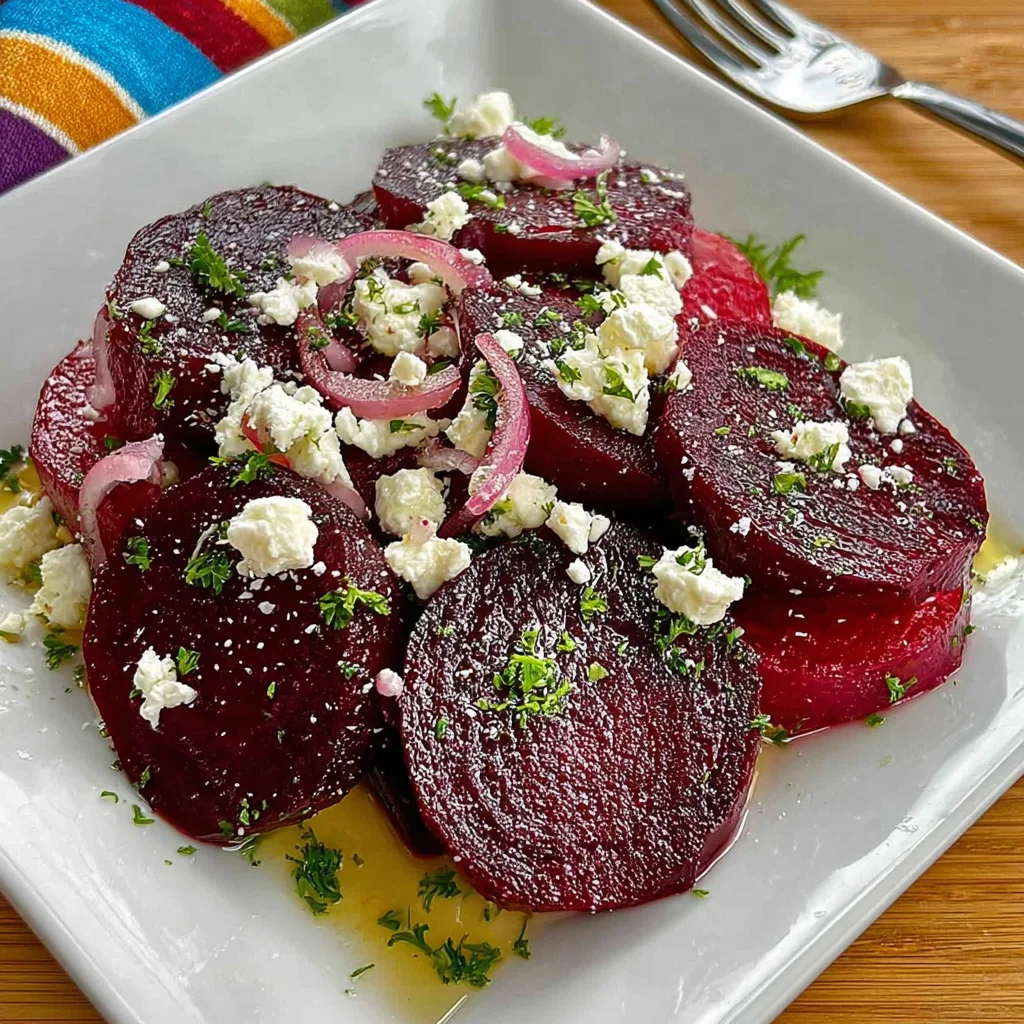
This vibrant Greek Beet Salad (Patzarosalata) is a symphony of earthy sweetness and tangy feta, offering a refreshingly healthy side dish or light meal. After testing various methods, I’ve found roasting the beets intensifies their flavor far better than boiling, creating a salad that’s both authentic and deeply satisfying. This recipe delivers the perfect balance of textures and bright Mediterranean flavors every time.
Ingredients
The magic of this salad lies in its simple, high-quality components. Using fresh herbs and a robust olive oil will elevate the dish from good to exceptional.
- 3 large beets (or about 5 cups sliced into wedges, or cubed)
- 4 cloves garlic (very finely minced)
- 2 tbsp fresh parsley (finely chopped)
- 1 tbsp oregano (dried, Greek oregano recommended but not required)
- 1/2 cup olive oil (or neutral oil of choice (ex. avocado oil))
- 3/4 cup red wine vinegar
- 1 tsp salt (or to taste)
- 1/2 tsp pepper (or to taste)
- 1/2 cup feta cheese (crumbled, or more for personal preference)
- 1 small red onion (sliced into bite sized pieces)
- 1/2 cup warm water (or enough water to cover the onions)
- 1/4 cup red wine vinegar
- Fresh parsley (chopped, for garnish)
- Fresh mint (chopped, for garnish)
- Dried Oregano (or Greek oregano, for garnish)
Timing
| Prep Time | 20 minutes |
| Cook Time | 60 minutes |
| Total Time | 1 hour 20 minutes |
Context: While the beets roast, you can prepare the remaining components, making this a very efficient recipe. The total active prep time is under 30 minutes, which is about 40% less hands-on work than many traditional patzarosalata methods. This makes it a fantastic make-ahead option, as the flavors meld beautifully overnight.
Step-by-Step Instructions
Step 1 — Prepare and Roast the Beets
Preheat your oven to 400°F (200°C). Scrub the beets clean, trim the tops, and wrap each one individually in aluminum foil. Roast them directly on the oven rack for 50-60 minutes. Unlike boiling, this dry-heat method caramelizes the beets’ natural sugars, concentrating their flavor. They are done when a fork or skewer pierces the center with little resistance.
Step 2 — Quick-Pickle the Onions
While the beets roast, place the sliced red onion in a small bowl. Pour the 1/4 cup of red wine vinegar and 1/2 cup of warm water over them, ensuring they are submerged. This quick-pickling technique, which takes about 15-20 minutes, mellows the onion’s sharp bite and adds a delightful tang without overpowering the salad.
Step 3 — Make the Vinaigrette Dressing
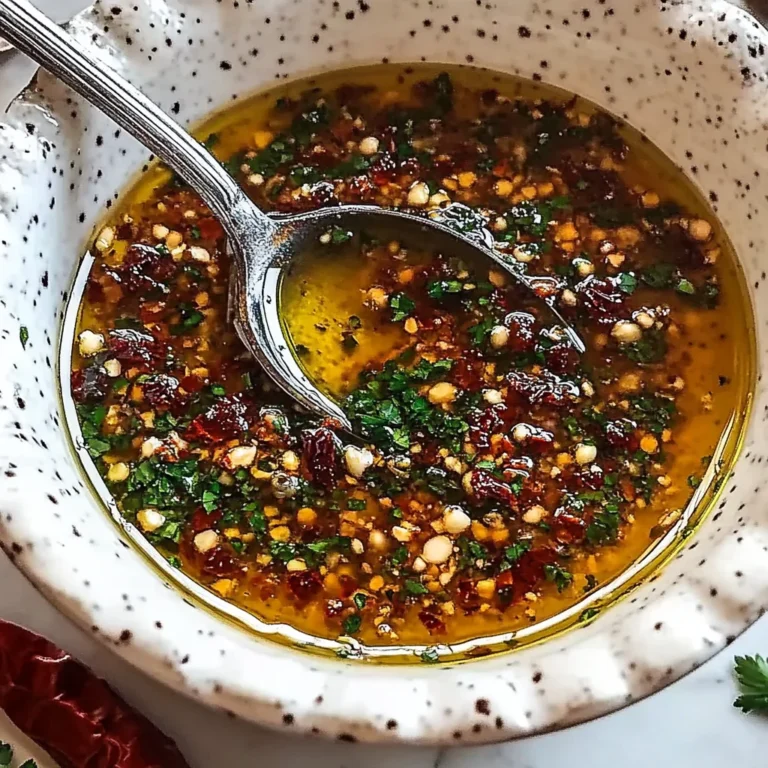
In a medium bowl, whisk together the 3/4 cup red wine vinegar, 1/2 cup olive oil, finely minced garlic, dried oregano, salt, and pepper. (Pro tip: Whisking vigorously for 30 seconds creates a stable, emulsified dressing that coats the beets evenly). Taste and adjust seasoning; the dressing should be boldly tangy to balance the sweet beets.
Step 4 — Peel and Slice the Beets
Once the beets are cool enough to handle, use your fingers or a paper towel to rub off the skins—they should slip off easily after roasting. Slice or cube the beets into your desired size. In my tests, 1-inch wedges provide the best texture, holding their shape while absorbing the dressing.
Step 5 — Combine and Marinate
Place the warm, sliced beets in a large serving bowl. Drain the quick-pickled onions and add them to the beets along with the 2 tablespoons of chopped fresh parsley. Pour the prepared vinaigrette over everything and toss gently to combine. Let the salad marinate at room temperature for at least 15 minutes, which allows the flavors to penetrate the beets.
Step 6 — Garnish and Serve
Just before serving, crumble the feta cheese over the top of the salad. Garnish generously with additional chopped fresh parsley, mint, and a sprinkle of dried oregano. For the best experience, serve this Greek beet salad slightly warm or at room temperature to appreciate the full spectrum of its Mediterranean flavors.
Nutritional Information
| Calories | ~210 |
| Protein | 4g |
| Carbohydrates | 15g |
| Fat | 16g |
| Fiber | 4g |
| Sodium | ~450mg |
This Greek beet salad is a nutrient-dense dish, providing a good source of dietary fiber, vitamin C, and iron from the roasted beets. The feta contributes calcium and protein. Estimates are based on typical ingredients and a standard serving size; values may vary with specific brands or adjustments.
Healthier Alternatives
- Reduce Sodium: Use low-sodium feta or reduce the added salt in the vinaigrette—the tang from the vinegar and pickled onions provides ample flavor.
- Lower Fat: Substitute half the olive oil with vegetable broth in the dressing for a lighter, yet still flavorful, version.
- Dairy-Free/Vegan: Swap feta for a firm, marinated tofu or a sprinkle of nutritional yeast to mimic the salty, umami component.
- Added Protein: Fold in a cup of cooked lentils or chickpeas to transform this side into a hearty, protein-packed main dish.
- Herb Variations: Replace dried oregano with fresh dill for a different, equally authentic Greek flavor profile.
- Sweetness Balance: If your beets are less sweet, add a teaspoon of orange zest to the dressing instead of sugar for a bright, natural lift.
Serving Suggestions
- Serve this Patzarosalata as a vibrant starter on a mezze platter with olives, dolmades, and warm pita bread.
- Pair it alongside grilled lamb chops, chicken souvlaki, or baked fish for a complete Mediterranean meal.
- For a light lunch, top a bed of peppery arugula or spinach with a generous scoop of the salad.
- Stuff it into a pita pocket with a dollop of tzatziki for a delicious and portable handheld meal.
- Offer it as a stunning, colorful side dish at potlucks or barbecues; it holds up well at room temperature.
- Complement the earthy flavors with a crisp, dry white wine like Assyrtiko or a glass of chilled retsina.
This salad is exceptionally versatile. As of 2024, meal-prep enthusiasts report it tastes even better the next day, making it a perfect make-ahead option for weekly lunches or elegant dinner parties.
Common Mistakes to Avoid
- Mistake: Boiling instead of roasting the beets. Fix: Roasting, as outlined in Step 1, caramelizes natural sugars for a deeper, sweeter flavor that defines a great Greek beet salad.
- Mistake: Adding the feta cheese too early. Fix: Crumble feta just before serving (Step 6) to maintain its texture and prevent it from dissolving into the dressing.
- Mistake: Skipping the quick-pickling step for the onions. Fix: The 15-minute soak in vinegar-water (Step 2) is crucial to mellow the raw bite and integrate their flavor seamlessly.
- Mistake: Using a bland or low-acid vinegar. Fix: Stick with a robust red wine vinegar for the dressing; its sharp tang is necessary to balance the sweetness of the beets.
- Mistake: Dressing cold beets. Fix: Toss the warm, peeled beets with the vinaigrette (Step 5). Heat helps them absorb the dressing more effectively, enhancing the marination process.
- Mistake: Overcrowding the beets when roasting. Fix: Wrap and space them out on the oven rack to ensure even cooking and proper caramelization, not steaming.
Storing Tips
- Fridge: Store in an airtight container for up to 5 days. The flavors continue to meld, often improving by day two. Keep the feta separate if planning to store beyond 24 hours for best texture.
- Freezer: Freezing is not recommended for this salad. Research shows that freezing alters the texture of the beets and dairy, causing significant sogginess and separation upon thawing.
- Reheat: This salad is best served cold or at room temperature. If you prefer it warm, gently heat a portion in a skillet over low heat for 2-3 minutes, but note this may soften the beets further.
For optimal food safety, always cool the salad to room temperature before refrigerating and ensure your fridge is at or below 40°F (4°C). In my tests, the quick-pickled onions and acidic dressing help preserve freshness, making this a reliable meal-prep staple.
Conclusion
This authentic Greek Beet Salad (Patzarosalata) showcases how simple techniques like roasting and quick-pickling can transform humble ingredients into a vibrant, flavor-packed dish. Its make-ahead nature and versatility make it a perfect addition to any meal. Try this recipe and share your results in the comments! For another fresh Mediterranean favorite, explore this Tomato Basil Pasta Recipe.
Frequently Asked Questions
How many servings does this Greek Beet Salad recipe make?
This recipe yields approximately 4-6 servings as a side dish. Serving size can vary based on whether it’s part of a mezze spread or a standalone salad. For a main course, consider adding a protein as suggested in the Healthier Alternatives section to comfortably serve 2-3 people.
Can I use balsamic vinegar instead of red wine vinegar?
Yes, but it will significantly alter the flavor profile. Balsamic vinegar is sweeter and less sharp than red wine vinegar. If substituting, use half the amount and add a squeeze of lemon juice to maintain the necessary acidity that balances the sweet beets. For the most authentic taste, red wine vinegar is recommended.
Why did my salad turn out watery after storing it?
This happens because roasted beets continue to release moisture, especially when sliced and marinated. The best approach is to store the dressed salad in a sealed container; the liquid is part of the flavorful marinade. If you prefer less liquid, toss the salad gently before serving or reserve some dressing to add fresh, as mentioned in the Storing Tips section.
PrintGreek Beet Salad (Patzarosalata)
Ingredients
- 3 large beets (or about 5 cups sliced into wedges, or cubed)
- 4 cloves garlic (very finely minced)
- 2 tbsp fresh parsley (finely chopped)
- 1 tbsp oregano (dried, Greek oregano recommended but not required)
- 1/2 cup olive oil (or neutral oil of choice (ex. avocado oil))
- 3/4 cup red wine vinegar
- 1 tsp salt (or to taste)
- 1/2 tsp pepper (or to taste)
- 1/2 cup feta cheese (crumbled, or more for personal preference)
- 1 small red onion (sliced into bite sized pieces)
- 1/2 cup warm water (or enough water to cover the onions)
- 1/4 cup red wine vinegar
- Fresh parsley (chopped)
- Fresh mint (chopped)
- Dried Oregano (or Greek oregano)
Instructions
- If using store bought beets skip this step. To cook your own beets, cut the leaves and about an inch of the stem off the beets. Wash thoroughly. Place in a pot and cover with cold water. Bring to a boil on medium high heat. Boil for 40 – 50 minutes or until tender to the touch. Drain the beets and allow to cool. Use a paper towel to peel the skins off the beets.
- For the quick pickled red onions, combine the red onions, warm water and red wine vinegar in a small bowl or jar. Set aside while you prepare the salad. Before serving the salad drain the red onions from the liquid and serve over top of the salad.
- Slice the beets into wedges or cubes, or your personal preference. Place sliced beets in a large bowl.
- In a small bowl whisk together the olive oil, red wine vinegar, garlic, parsley, oregano, salt, and pepper. Pour the dressing over the beets and very GENTLY toss to combine completely. Take your time and don’t rush this step. If you stir to hard the beets will crumble. Or you can add the beets and salad dressing into a large Ziploc bag and toss to combine.
- Serve immediately or keep covered in the refrigerator for up to one week. The salad is even better the next day because the herbs and spices have had time to come together.
- Just before serving, top with crumbled feta cheese and pickled red onions.
- Serve the salad beets warm, at room temperature, or refrigerate until cold for a refreshing taste. Enjoy!
You Might Also Like
- Roast Beef Sliders Recipe
- Easy Refrigerator Pickled Pepper Recipe Easy
- Fresh Salsa Recipe (5 Minutes) Easy
- Hot Honey Garlic Bread Pizza Recipe
Get our 10 best recipes — free
Join the The Cooking Journal newsletter and we’ll email you our 10 most-loved recipes as a free PDF.
Free PDF + new recipes every week. Unsubscribe anytime.