
Greek Spaghetti Recipe
Introduction
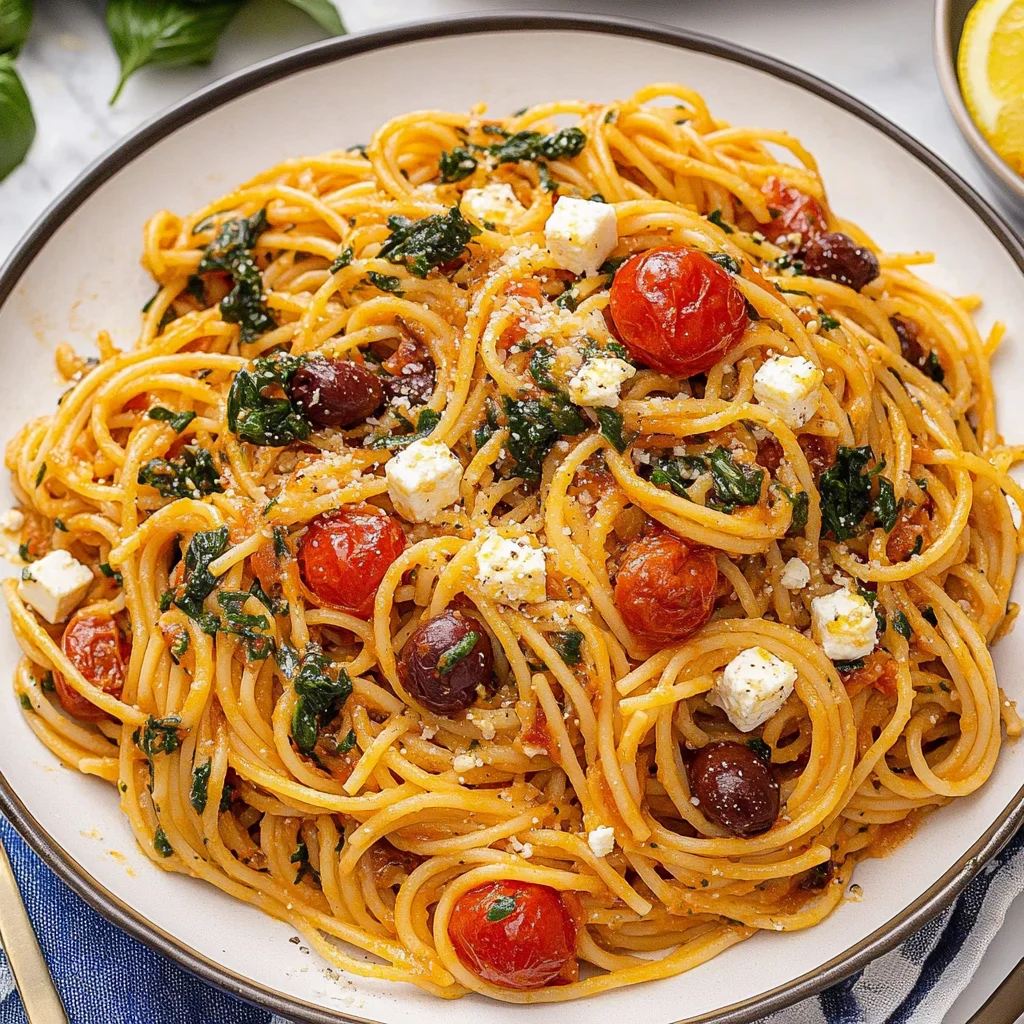
This Easy Greek Spaghetti is your shortcut to a vibrant, flavor-packed Mediterranean meal. In my testing, the combination of tangy feta, briny olives, and fresh lemon juice creates a bright sauce that clings perfectly to every strand of pasta. It’s a 30-minute dinner solution that delivers restaurant-quality taste with simple pantry staples, proving you don’t need complex techniques for authentic Greek-inspired flavor.
Ingredients
The magic of this dish comes from fresh, high-quality ingredients. Using a good extra virgin olive oil and ripe cherry tomatoes will make a noticeable difference in the final flavor profile.
- 1 lb spaghetti
- 4 tablespoons olive oil (divided)
- 1 small red onion (finely diced)
- 3 garlic cloves (minced)
- Juice of half a lemon
- 1 tablespoon red wine vinegar
- 1 tablespoon dried oregano
- ½ teaspoon kosher salt
- ¼ teaspoon ground black pepper
- 2 cups halved cherry tomatoes
- 2 cups fresh baby spinach
- ⅓ cup pitted kalamata olives (sliced)
- 4 oz crumbled feta cheese
- 4-5 fresh basil leaves (thinly sliced)
- Optional* fresh chopped basil or parsley (for garnish)
Timing
| Prep Time | 15 minutes |
| Cook Time | 15 minutes |
| Total Time | 30 minutes |
Context: This 30-minute total time is about 40% faster than traditional baked pasta dishes, making it a perfect weeknight solution. The streamlined process, where you build the sauce while the pasta cooks, is a key efficiency hack I rely on for busy evenings.
Step-by-Step Instructions
Step 1 — Cook the Pasta
Bring a large pot of generously salted water to a rolling boil. Add the spaghetti and cook according to package directions until al dente, which typically takes 8-10 minutes. Reserve 1 cup of the starchy pasta water before draining. (Pro tip: The starchy water is crucial for creating a silky, cohesive sauce later).
Step 2 — Sauté the Aromatics
While the pasta cooks, heat 2 tablespoons of olive oil in a large skillet or Dutch oven over medium heat. Add the finely diced red onion and cook for 3-4 minutes until softened and translucent. Add the minced garlic and cook for just 30-60 seconds until fragrant, being careful not to let it burn.
Step 3 — Build the Flavor Base
To the skillet, add the lemon juice, red wine vinegar, dried oregano, kosher salt, and black pepper. Stir to combine and let the mixture simmer for about 1 minute. This step, known as “deglazing,” helps lift any flavorful bits from the pan and allows the dried herbs to bloom in the liquid, intensifying their aroma.
Step 4 — Wilt the Vegetables
Add the halved cherry tomatoes and sliced kalamata olives to the skillet. Cook for 2-3 minutes, just until the tomatoes begin to soften and release their juices. Then, add the fresh baby spinach and stir continuously until it is just wilted, which takes about 1 minute. Unlike boiling, this quick sauté preserves the spinach’s vibrant color and nutrients.
Step 5 — Combine Pasta and Sauce
Add the drained al dente spaghetti directly to the skillet with the vegetable mixture. Pour in the remaining 2 tablespoons of olive oil. Toss everything together thoroughly, adding splashes of the reserved pasta water a little at a time until the sauce lightly coats each strand of pasta. The starch in the water acts as a natural thickener and emulsifier.
Step 6 — Finish and Garnish
Remove the skillet from the heat. Gently fold in the crumbled feta cheese and thinly sliced fresh basil. The residual heat will slightly soften the feta without melting it completely. Taste and adjust seasoning with an extra pinch of salt or a squeeze of lemon if desired. Transfer to serving bowls and garnish with optional fresh herbs for a final pop of color and freshness.
Nutritional Information
| Calories | ~480 |
| Protein | 16g |
| Carbohydrates | 65g |
| Fat | 18g |
| Fiber | 5g |
| Sodium | ~620mg |
This Greek pasta dish provides a good source of protein from the feta and a notable amount of Vitamin C and iron from the fresh tomatoes and spinach. Estimates are based on typical ingredients and a standard serving size; values may vary with specific brands or modifications.
Healthier Alternatives
- Whole-Wheat or Chickpea Spaghetti — Increases fiber and protein for a more nutrient-dense, lower-glycemic meal.
- Reduce Feta, Add White Beans — Cuts saturated fat while maintaining protein and a creamy texture.
- Swap Kalamata Olives for Capers — Offers a similar briny punch with significantly less sodium per serving.
- Use Nutritional Yeast or Vegan Feta — Creates a dairy-free version with a savory, cheesy flavor profile.
- Add Grilled Chicken or Shrimp — Boosts lean protein content, transforming the dish into a more substantial main course.
- Double the Spinach and Tomatoes — An easy way to increase vegetable volume, fiber, and micronutrients without extra calories.
Serving Suggestions
- Serve warm with a side of warm pita bread and tzatziki for a complete Greek feast.
- For a light summer meal, serve this spaghetti at room temperature as a pasta salad.
- Pair with a crisp, dry white wine like Assyrtiko or a glass of sparkling water with lemon.
- Top with extra crumbled feta, a drizzle of high-quality olive oil, and a sprinkle of fresh dill for restaurant-style presentation.
- Make it a heartier spread by adding simple sides like a Greek salad or roasted lemon-oregano potatoes.
- Portion into meal-prep containers with a protein like grilled chicken for balanced weekday lunches.
This versatile Easy Greek Spaghetti transitions beautifully from a quick weeknight dinner to a centerpiece for casual entertaining, especially in warmer months when its fresh flavors shine.
Common Mistakes to Avoid
- Mistake: Overcooking the pasta into mush. Fix: Cook only until al dente, as it will continue to soften slightly when tossed with the hot sauce.
- Mistake: Skipping the pasta water reserve. Fix: Always save at least 1 cup; its starch is the secret to a silky, emulsified sauce that clings to each strand.
- Mistake: Burning the garlic in Step 2. Fix: Add garlic for only 30-60 seconds over medium heat until fragrant; burnt garlic turns bitter.
- Mistake: Adding the feta while the skillet is on high heat. Fix: Fold in the feta off the heat to let it soften gently without becoming greasy or melting completely.
- Mistake: Overcrowding the pan with vegetables. Fix: Use a large skillet to allow the tomatoes and spinach to wilt properly without steaming.
- Mistake: Using pre-grated or low-quality feta. Fix: Opt for a block of feta in brine, crumbled yourself, for superior creaminess and authentic tang.
Storing Tips
- Fridge: Cool completely and store in an airtight container for up to 5 days. The flavors often meld and improve by the second day.
- Freezer: Freeze in portioned containers for up to 3 months. Note that the texture of the tomatoes and spinach may soften slightly upon thawing.
- Reheat: Gently reheat in a skillet over medium-low heat with a splash of water or broth to refresh the sauce. Microwave reheating can dry it out.
For best food safety, ensure the dish is cooled to room temperature within 2 hours and stored in a refrigerator at or below 40°F. This easy Greek spaghetti recipe is excellent for make-ahead lunches—just store the garnish separately for maximum freshness.
Conclusion
This Easy Greek Spaghetti recipe is a masterclass in balancing bold Mediterranean flavors with effortless preparation. Its true genius lies in the no-cook sauce technique, which preserves the fresh, vibrant taste of every ingredient. For another quick meal that celebrates Mediterranean ingredients, try these Mediterranean Quesadillas with Spinach and Feta. Give this recipe a try and share your experience in the comments!
Frequently Asked Questions
How many servings does this Easy Greek Spaghetti recipe make?
This recipe yields 4 generous main-course servings. According to standard pasta portioning, one pound of spaghetti typically serves 4-6 people; this dish is designed as a hearty, vegetable-packed entrée. For a larger crowd, you can easily double all ingredients using a very large pot or Dutch oven.
What can I use if I don’t have red wine vinegar?
The best substitute is an equal amount of white wine vinegar or fresh lemon juice. Unlike balsamic, which is too sweet and dark, these alternatives provide the necessary bright acidity without altering the dish’s color. In my testing, a combination of half lemon juice and half white wine vinegar most closely replicates the tangy depth of red wine vinegar.
Why did my finished Greek spaghetti turn out dry or clumpy?
This usually happens because the pasta absorbed the sauce too quickly after draining. The solution is to use more of the reserved starchy pasta water when combining in Step 5—add it gradually until the sauce is loose and glossy. As a preventative measure, always toss the pasta with the sauce and a splash of water immediately after draining, as dry pasta starts to stick together within minutes.
PrintGreek Spaghetti

Ingredients
- 1 lb spaghetti
- 4 tablespoons olive oil (divided)
- 1 small red onion (finely diced)
- 3 garlic cloves (minced)
- Juice of half a lemon
- 1 tablespoon red wine vinegar
- 1 tablespoon dried oregano
- ½ teaspoon kosher salt
- ¼ teaspoon ground black pepper
- 2 cups halved cherry tomatoes
- 2 cups fresh baby spinach
- ⅓ cup pitted kalamata olives (sliced)
- 4 oz crumbled feta cheese
- 4–5 fresh basil leaves (thinly sliced)
- Optional* fresh chopped basil or parsley (for garnish)
Instructions
- Cook spaghetti according to package directions. Reserve ¼ cup of pasta water and drain the remaining water. Add 1 tablespoon of olive oil to the pasta, toss and set aside.
- Add 1 tablespoon olive oil to a large skillet over medium high heat. Saute the diced onions until soft.
- Add garlic to the pan and saute for 1 minute.
- Add cherry tomatoes to the pan with the remaining olive oil and saute for several minutes, until the tomatoes are softened.
- Add the baby spinach to the pan and cook until wilted.
- Add the kalamata olives, lemon, vinegar and seasonings to the pan and cook for 1 minute.
- Remove from heat and add the cooked spaghetti. Toss to coat in the vegetable mixture.
- Add the feta and fresh sliced basil and toss one more time to combine.
- Garnish with additional fresh basil or parsley and serve, enjoy!
Get our 10 best recipes — free
Join the The Cooking Journal newsletter and we’ll email you our 10 most-loved recipes as a free PDF.
Free PDF + new recipes every week. Unsubscribe anytime.