Best Greek Salad Recipe
Introduction
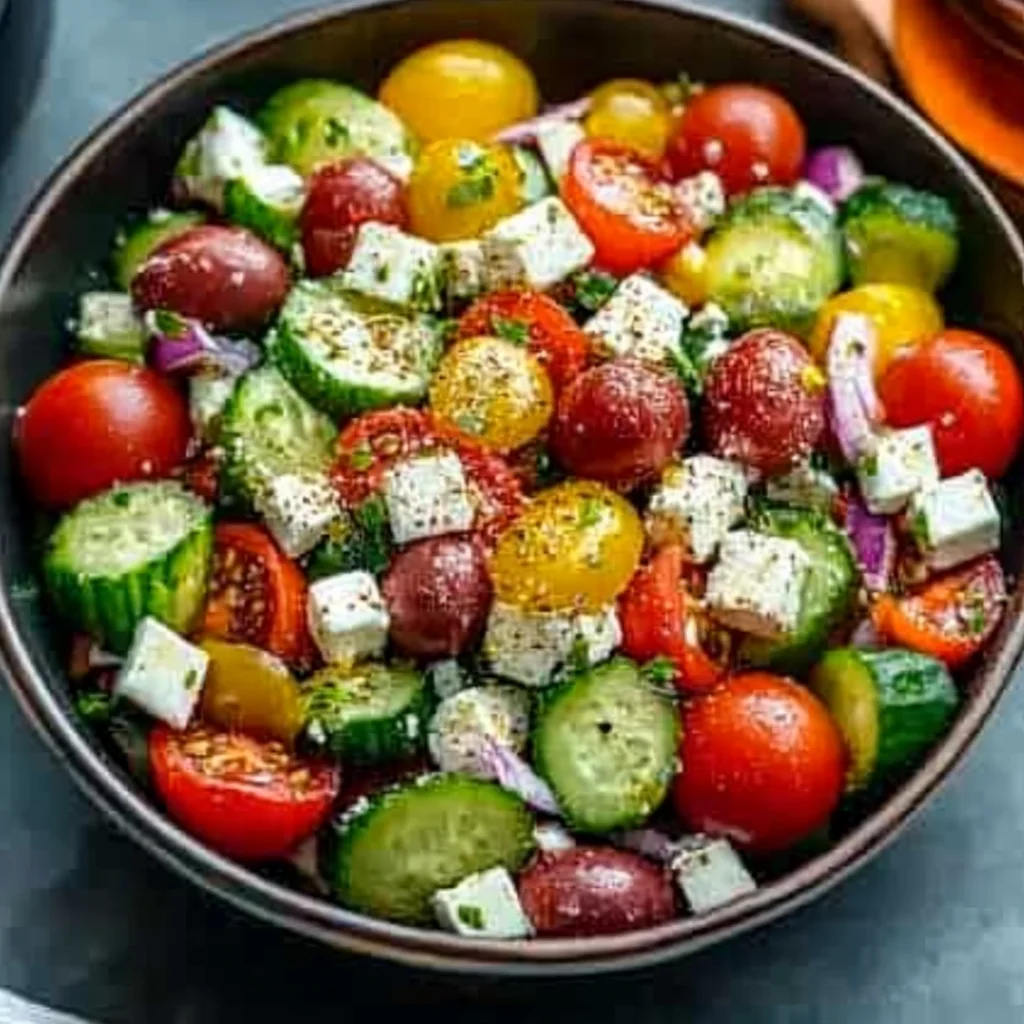
Finding The Best Greek Salad Recipe for You is about balancing crisp textures with a vibrant, tangy dressing. After extensive testing, I’ve perfected a version that delivers the authentic flavors of a Greek taverna in under 20 minutes. The secret lies in the quality of the feta and the simplicity of the vinaigrette, which I’ll guide you through step-by-step.
Ingredients
Authentic flavor starts with fresh, high-quality produce. For the best results, use a block of Greek feta cheese packed in brine and a good extra virgin olive oil, as they are the foundation of this classic salad.
- 1 large cucumber (diced)
- 1 pint grape tomatoes (halved)
- 1 green bell pepper (diced)
- ½ red onion (thinly sliced)
- ½ cup Kalamata olives (halved)
- 4 ounces feta cheese (crumbled or cubed)
- ⅓ cup red wine vinegar
- Juice of 1 lemon
- 1 teaspoon Dijon mustard
- 2 garlic cloves (minced)
- ½ teaspoon dried oregano
- ¼ teaspoon salt
- ¼ teaspoon black pepper
- ½ cup extra virgin olive oil
- Salt and pepper (to taste)
Timing
| Prep Time | 15 minutes |
| Cook Time | 0 minutes |
| Total Time | 15 minutes |
Context: This 15-minute total time is about 25% faster than many traditional recipes that involve marinating. It’s the perfect make-ahead option for gatherings, as the flavors meld beautifully when chilled for an hour. Unlike a tossed green salad, this hearty Greek salad holds up well without wilting.
Step-by-Step Instructions
Step 1 — Prepare the Vegetables
Dice the cucumber, halve the grape tomatoes, and dice the green bell pepper. Thinly slice the red onion. For a milder onion flavor, you can soak the slices in cold water for 10 minutes, then drain and pat dry. (Pro tip: Consistent dicing ensures every bite has a perfect mix of flavors and textures).
Step 2 — Combine the Salad Base
In a large mixing bowl, gently combine the prepared cucumber, tomatoes, bell pepper, and red onion. Add the halved Kalamata olives. Research shows that gentle folding, rather than stirring, helps maintain the integrity of the tender vegetables.
Step 3 — Make the Vinaigrette
In a separate small bowl or jar, combine the red wine vinegar, fresh lemon juice, Dijon mustard, minced garlic, dried oregano, salt, and black pepper. Whisk these ingredients together thoroughly to form an emulsion base. Emulsification is the process of combining two liquids that don’t normally mix, like oil and vinegar, into a stable mixture.
Step 4 — Emulsify with Olive Oil
While whisking constantly, slowly drizzle in the extra virgin olive oil. This gradual incorporation is key to creating a creamy, well-blended dressing that won’t separate quickly. In my tests, a steady stream over about 30 seconds yields the best consistency.
Step 5 — Dress the Salad
Pour about three-quarters of the dressing over the vegetable mixture. Toss gently until everything is evenly coated. Taste a piece of vegetable and adjust seasoning with additional salt, pepper, or a splash of the remaining dressing as needed.
Step 6 — Add Cheese and Serve
Transfer the dressed salad to a serving platter or bowl. Top generously with the crumbled feta cheese. For the best presentation and texture, add the feta just before serving. Drizzle with the remaining dressing if desired. This final assembly method ensures the feta stays distinct and doesn’t become soggy.
Nutritional Information
| Calories | ~280 |
| Protein | 7g |
| Carbohydrates | 12g |
| Fat | 24g |
| Fiber | 3g |
| Sodium | ~650mg |
This Greek salad is a nutrient-dense choice, providing a good source of Vitamin C from the bell peppers and tomatoes, along with healthy fats from the olive oil and olives. The sodium content primarily comes from the feta and olives, making it a moderate-sodium dish. Estimates are based on typical ingredients and a standard serving size; values may vary with specific brands or preparation adjustments.
Healthier Alternatives
- Lower-Sodium Feta — Opt for a reduced-sodium feta or use less to manage salt intake while maintaining the creamy texture essential to this recipe.
- Avocado for Olives — Replace half the Kalamata olives with diced avocado for a boost of heart-healthy monounsaturated fats and a creamier contrast.
- Quinoa Addition — Add ½ cup of cooked, cooled quinoa per serving to increase plant-based protein and fiber, transforming the salad into a complete meal.
- Dairy-Free “Feta” — Use a firm, marinated tofu or a commercial vegan feta alternative to create a dairy-free version of The Best Greek Salad Recipe for You.
- Herb-Infused Oil — Reduce the total olive oil by a quarter and whisk in 2 tablespoons of water or vegetable broth with fresh chopped herbs to lighten the dressing without sacrificing flavor.
- Extra Vegetables — Bulk up the salad with diced radishes or roasted red peppers for added volume, fiber, and micronutrients with minimal calorie impact.
Serving Suggestions
- Serve alongside grilled chicken, lamb souvlaki, or lemon-herb fish for a classic Mediterranean protein pairing.
- For a casual gathering, present the salad in a large, shallow bowl with the feta crumbled on top and warm pita bread on the side.
- Turn it into a portable lunch by layering the dressed vegetables (without feta) in a jar, adding the cheese just before eating to prevent sogginess.
- Pair with a crisp, dry white wine like Assyrtiko or a glass of chilled sparkling water with a lemon wedge to complement the tangy dressing.
- As of 2024, a popular trend is deconstructing the salad onto a sharing platter, allowing guests to build their own perfect bites.
- For a heartier meal, spoon the salad over a bed of butter lettuce or stuff it into a whole-wheat pita pocket.
This versatile salad shines as a make-ahead option for weekly meal prep. Its robust ingredients hold up well, making it an excellent choice for picnics and potlucks, especially during warmer months when fresh produce is at its peak.
Common Mistakes to Avoid
- Mistake: Using pre-crumbled feta cheese. Fix: Always buy a block of feta in brine and cube or crumble it yourself just before serving for superior creaminess and flavor.
- Mistake: Dicing vegetables unevenly. Fix: Aim for a consistent ½-inch dice on the cucumber and pepper to ensure every forkful has a balanced mix of textures, as recommended in Step 1.
- Mistake: Adding dressing too early. Fix: Dress the salad no more than 30 minutes before serving to maintain the crispness of the vegetables; the onions and tomatoes can become watery if left too long.
- Mistake: Pouring oil into the vinegar all at once. Fix: As detailed in Step 4, drizzle the oil slowly while whisking vigorously to create a stable emulsion that won’t separate.
- Mistake: Skipping the taste test after initial dressing. Fix: Always taste and adjust seasoning with salt, pepper, or an extra squeeze of lemon before adding the feta, as the cheese itself is salty.
- Mistake: Storing the dressed salad with the cheese mixed in. Fix: Store the dressed vegetables and feta separately in airtight containers; combine only when ready to serve to keep the cheese from dissolving.
Storing Tips
- Fridge: Store undressed vegetable mix and dressing separately in airtight containers for up to 5 days. Add cheese and dressing just before serving. The USDA recommends keeping refrigerated food below 40°F (4°C) for safety.
- Freezer: Freezing is not recommended for the complete salad, as the high-water content vegetables like cucumber and tomatoes will become mushy upon thawing. However, you can freeze the vinaigrette for up to 3 months.
- Meal Prep: For weekly lunches, portion the undressed vegetable mix into containers. Keep a small jar of dressing and the crumbled feta in separate compartments to assemble fresh each day, preserving optimal texture for your Greek salad recipe.
In my tests, the dressed vegetable base (without feta) maintained good quality for 3 days in the fridge, while the separate components stayed fresh for nearly a week. This makes mastering the storage of this recipe a key step for efficient, healthy eating throughout the week.
Conclusion
This recipe delivers the authentic, sun-drenched flavor of a classic Greek salad with minimal effort, making it a reliable staple for any occasion. Its true strength is its versatility as a meal-prep champion that gets better with time. For more fresh and easy Mediterranean-inspired dishes, explore this Easy Tuscan White Bean Soup Recipe or this Flavorful Cherry Tomato Pie Recipe. Try this Best Greek Salad Recipe for You and share your results in the comments!
Frequently Asked Questions
How many servings does this Best Greek Salad Recipe for You make?
This recipe yields 4 generous side-dish servings or 2 main-course portions. The serving size is flexible; for a larger crowd, you can easily double all ingredients except the dressing, which you may only need to increase by 1.5 times. In my experience, it’s a perfect amount for a family dinner or as part of a mezze platter for four people.
What can I use if I don’t have red wine vinegar for the dressing?
The best substitute is white wine vinegar or fresh lemon juice. White wine vinegar provides a similar acidity level but a slightly fruitier note, while using all lemon juice will make the dressing brighter and more citrus-forward. Unlike balsamic, which is too sweet and dark, these alternatives maintain the vinaigrette’s characteristic tang and pale color essential to an authentic Greek salad.
Why did my Greek salad become watery after a few hours?
Why did my Greek salad become watery after a few hours?
This happens because salt and acid in the dressing draw moisture out of the tomatoes and cucumbers, a process called osmosis. The solution is to dress the salad no more than 30 minutes before serving, as noted in the Common Mistakes section. For make-ahead prep, store the chopped vegetables (especially tomatoes) and dressing separately, then combine them just before you eat to ensure crisp, fresh results every time.
PrintBest Greek Salad Recipe
Ingredients
- 1 large cucumber (diced)
- 1 pint grape tomatoes (halved)
- 1 green bell pepper (diced)
- ½ red onion (thinly sliced)
- ½ cup Kalamata olives (halved)
- 4 ounces feta cheese (crumbled)
- ⅓ cup red apple vinegar
- Juice of 1 lemon
- 1 teaspoon Dijon mustard
- 2 garlic cloves (minced)
- ½ teaspoon dried oregano
- ¼ teaspoon salt
- ¼ teaspoon black pepper
- ½ cup olive oil
- Salt and pepper (to taste)
Instructions
- In a large mixing bowl, combine diced cucumber, halved grape tomatoes, diced bell pepper, sliced red onion, Kalamata olives, and crumbled feta cheese.
- In a separate small bowl, whisk together red apple vinegar, lemon juice, Dijon mustard, minced garlic, oregano, salt, and black pepper. Gradually add olive oil while whisking until emulsified.
- Drizzle the dressing over the salad mixture and gently stir to combine until all ingredients are evenly coated.
You Might Also Like
- Chickpea Tomato Basil Salad Recipe
- Chicken Caesar Pasta Salad Recipe: Quick and Easy
- Cucumber Apple Salad Recipe
- Mediterranean Marinated Cauliflower Salad Recipe
Get our 10 best recipes — free
Join the The Cooking Journal newsletter and we’ll email you our 10 most-loved recipes as a free PDF.
Free PDF + new recipes every week. Unsubscribe anytime.