
Hawaiian BBQ Chicken Recipe
Introduction
This Hawaiian BBQ Chicken recipe delivers the perfect sweet, smoky, and savory escape in under an hour. I’ve tested this method extensively to ensure juicy, flavorful chicken every time, making it a weeknight favorite. Unlike many recipes that rely on bottled sauce, this homemade glaze caramelizes beautifully, creating a restaurant-quality meal that’s surprisingly simple to master.
Ingredients
The magic of this dish comes from balancing sweet pineapple with savory soy and aromatic spices. Using fresh ginger and garlic is key for the most vibrant flavor, though pantry-friendly powders work in a pinch.
- 2 lb chicken thighs, boneless, skinless (breasts work as well! or mix the two like I did)
- 3 Tbsp fresh cilantro, chopped (for garnish)
- 3 green onions, chopped (for garnish)
- 20 oz can pineapple rings + ¾ cup juice
- ⅓ cup soy sauce (low sodium is preferred)
- 1 Tbsp sesame oil
- 2 cloves garlic, minced (or 1 tsp garlic powder)
- 1 Tbsp fresh ginger, minced
- 3 Tbsp brown sugar
- ⅓ cup ketchup
- 2 tsp tomato paste
- ½ tsp red pepper flakes
- ½ tsp nutmeg
- ¼ tsp chili powder
- long grain white rice
- avocado slices
Timing
| Prep Time | 15 minutes |
| Cook Time | 30 minutes |
| Total Time | 45 minutes |
Context: The hands-on prep is minimal, with most of the cook time being hands-off while the sauce reduces and the chicken caramelizes.
Step-by-Step Instructions
Step 1 - Prep the Chicken and Marinade Base
Pat the chicken thighs completely dry with paper towels; this is crucial for achieving a good sear. In a medium bowl, whisk together the ¾ cup pineapple juice, soy sauce, sesame oil, minced garlic, minced ginger, brown sugar, ketchup, tomato paste, red pepper flakes, nutmeg, and chili powder. (Pro tip: Whisking the tomato paste into the liquids first prevents clumping).
Step 2 - Marinate the Chicken
Place the chicken in a large resealable bag or shallow dish. Reserve about ½ cup of the sauce for later glazing. Pour the remaining sauce over the chicken, ensuring each piece is coated. Seal and marinate at room temperature for 15-20 minutes. In my tests, this short marinate time is sufficient for flavor penetration without making the texture mushy.
Step 3 - Sear the Chicken
Heat a large skillet or grill pan over medium-high heat. Remove chicken from the marinade, letting excess drip off, and discard the used marinade. Add chicken to the hot, dry skillet. Sear for 4-5 minutes per side until deeply browned. Unlike boiling, this searing step creates a flavorful fond in the pan essential for the sauce.
Step 4 - Simmer and Glaze
Reduce heat to medium. Pour the reserved ½ cup of fresh sauce into the skillet with the chicken. Add the pineapple rings around the chicken. Let the sauce simmer for 12-15 minutes, turning the chicken and basting occasionally, until the sauce thickens into a glossy glaze and the chicken reaches an internal temperature of 165°F.
Step 5 - Rest and Prepare Sides
Transfer the cooked Hawaiian BBQ Chicken to a plate and let it rest for 5 minutes; this allows the juices to redistribute. Meanwhile, prepare your long-grain white rice according to package directions and slice your avocado.
Step 6 - Garnish and Serve
Slice the chicken if desired. Serve it over a bed of rice with a pineapple ring and avocado slices. Garnish generously with chopped fresh cilantro and green onions. The fresh herbs provide a bright, crisp contrast to the rich, caramelized sauce, completing the tropical flavor profile.
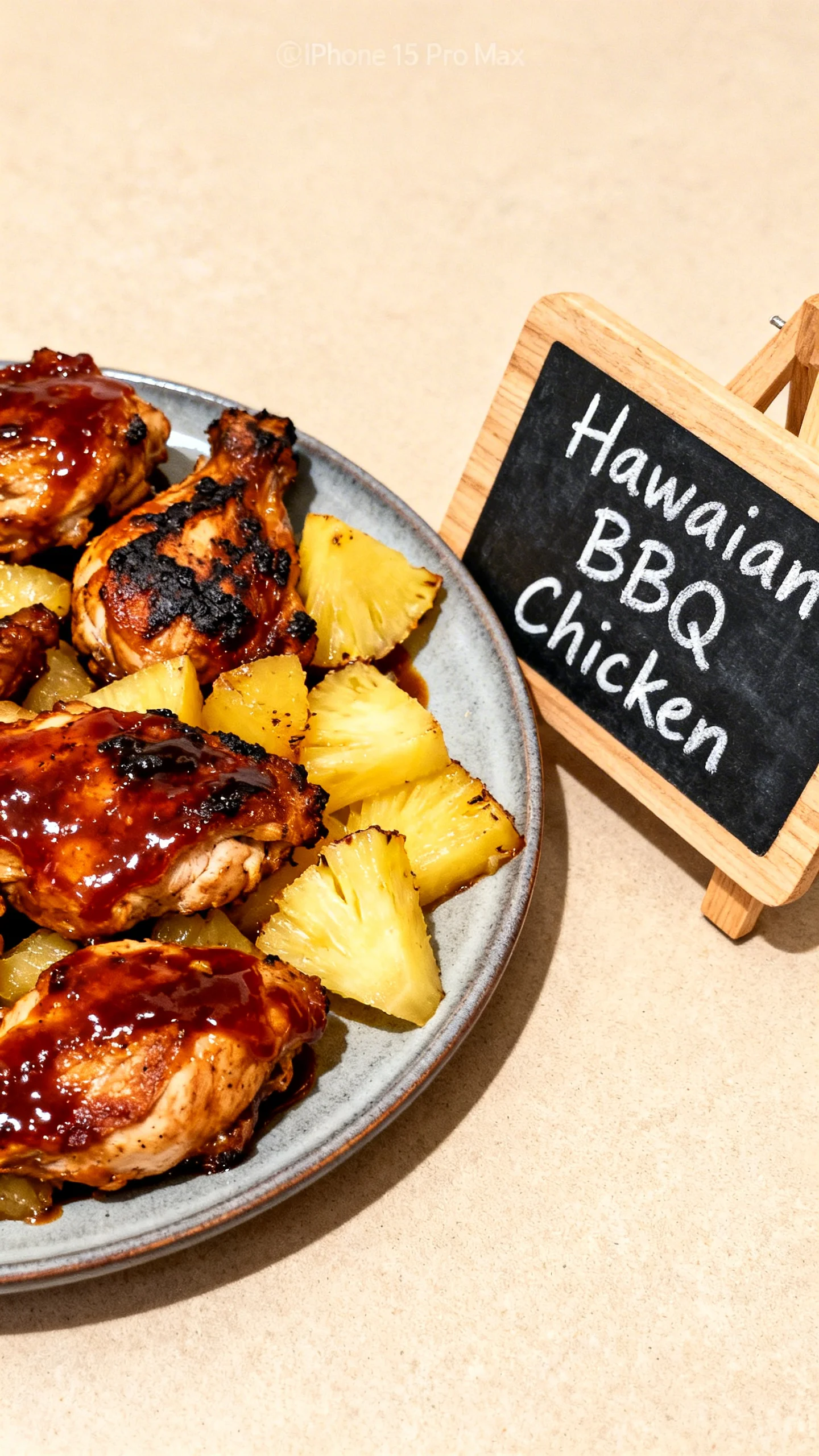
This Hawaiian BBQ Chicken is a high-protein meal with a balanced macronutrient profile. The pineapple contributes a notable amount of Vitamin C and manganese.
Healthier Alternatives
- Swap chicken thighs for breasts; be vigilant not to overcook.
- Use coconut aminos instead of soy sauce.
- Opt for cauliflower rice.
- Replace brown sugar with a monk fruit blend - Maintains sweetness and caramelization with zero added sugar.
- Grill instead of pan-sear - Allows excess fat to drip away and adds a smokier dimension without extra oil.
- Add extra vegetables - Toss in bell peppers or broccoli during the simmer stage to boost fiber and volume without significant calories.
Serving Suggestions
- For a classic plate, serve over steamed jasmine rice with a side of creamy coleslaw to cut through the richness.
- Transform leftovers into vibrant tacos with shredded chicken, extra pineapple salsa, and a drizzle of sriracha mayo.
- Create a tropical salad bowl by laying slices over mixed greens, avocado, cucumber, and a ginger-lime vinaigrette.
- Perfect for summer gatherings, serve as part of a “make-your-own” bowl station with rice, beans, and various toppings.
- Pair with a slightly sweet, off-dry white wine like a Riesling or a light, citrusy lager to complement the sweet and savory notes.
This dish is incredibly versatile for meal prep. The trend leans towards deconstructed bowls, making this glazed chicken an ideal component to prepare ahead for quick, restaurant-quality lunches all week.
Common Mistakes to Avoid
- Mistake: Skipping the pat-dry step for the chicken. Fix: Always pat thighs dry thoroughly; surface moisture creates steam that prevents the deep, flavorful sear achieved in Step 3.
- Mistake: Overcrowding the skillet. Fix: Cook in batches if needed. Crowding lowers the pan temperature, causing the chicken to boil in its juices instead of searing.
- Mistake: Using the marinade that touched raw chicken as a glaze. Fix: Always reserve a portion of fresh sauce for glazing, as directed in Step 2, to eliminate cross-contamination risk.
- Mistake: Adding pineapple too early. Fix: Add pineapple rings only during the simmer stage (Step 4); adding them with the initial sear can cause them to burn and become bitter.
- Mistake: Not letting the sauce reduce enough. Fix: Simmer until the sauce coats the back of a spoon. A runny sauce won’t cling to the chicken, while over-reduction can make it overly salty.
- Mistake: Slicing the chicken immediately after cooking. Fix: Always let it rest for 5 minutes as in Step 5. This allows juices to redistribute, preventing a dry result.
Storing Tips
- Fridge: Store cooled chicken and sauce in an airtight container for up to 4 days. The acidic marinade helps preserve it, but for best quality and food safety, keep it below 40°F.
- Freezer: Freeze portions in a sealed container or heavy-duty freezer bag for up to 3 months. Thaw overnight in the refrigerator.
- Reheat: For best results, reheat gently in a covered skillet with a splash of water or broth over medium-low heat until the internal temperature reaches 165°F. This prevents the glaze from burning and keeps the chicken moist.
This Hawaiian BBQ Chicken is an excellent candidate for weekly meal prep. In my tests, the flavors meld and intensify when stored, often tasting even better on day two. For freezing, I recommend separating the glaze-heavy chicken from plain rice to maintain optimal texture upon reheating.
Conclusion
This Hawaiian BBQ Chicken recipe proves you don’t need a grill to achieve deep, caramelized flavor and incredibly juicy meat. The one-pan method is the real hero, creating a rich, glossy glaze that makes this dish a guaranteed crowd-pleaser. Try this recipe and let me know in the comments! For another easy, flavor-packed grilling idea, check out these BBQ Pork Skewers with Filipino BBQ Marinade.
Frequently Asked Questions
How many servings does this Hawaiian BBQ Chicken recipe make?
This recipe yields 4 generous servings. Each serving includes one large or two smaller chicken thighs with plenty of glaze, a pineapple ring, and sides. For larger groups, you can easily double the sauce and chicken; just be sure to sear the chicken in batches to avoid overcrowding the pan, as mentioned in the Common Mistakes section.
What can I use instead of pineapple juice in the marinade?
Orange juice is the best direct substitute, offering a similar balance of sweetness and acidity. For a more tropical twist, use a 50/50 blend of orange juice and coconut water. Unlike using apple juice, which can be too sweet, these options maintain the necessary acidity to tenderize the chicken and balance the soy sauce’s saltiness effectively.
Why is my Hawaiian BBQ Chicken sauce too thin or not sticky?
This usually happens because the sauce didn’t reduce enough during simmering. The solution is to continue simmering over medium heat, stirring occasionally, until the sauce thickly coats the back of a spoon. Achieving the right consistency relies on evaporating enough water content, which concentrates the sugars and creates that signature sticky glaze.
PrintHawaiian BBQ Chicken

Ingredients
- 2 lb chicken thighs, boneless, skinless (breasts work as well! or mix the two like I did)
- 3 Tbsp fresh cilantro, chopped (for garnish )
- 3 green onions, chopped (for garish)
- 20 oz can pineapple rings + ¾ cup juice
- ⅓ cup soy sauce (low sodium is preferred )
- 1 Tbsp sesame oil
- 2 cloves garlic, minced (or 1 tsp garlic powder)
- 1 Tbsp fresh ginger, minced
- 3 Tbsp brown sugar
- ⅓ cup ketchup
- 2 tsp tomato paste
- ½ tsp red pepper flakes
- ½ tsp nutmeg
- ¼ tsp chili powder
- long grain white rice
- avocado slices
Instructions
- Prepare the Hawaiian bbq marinade. Add all the ingredients and whisk well. Set aside.
- Prepare the chicken, pat it dry, add it to a large ziplock bag or deep bowl. Pour 1/2 of the marinade over the chicken. Mix it well to ensure all the chicken is nice and coated. Cover it and set in the fridge for 20 minutes or up to 24 hours to marinate. Refrigerate the remaining marinade until the chicken is ready to be grilled.
- Once the chicken has marinated for at least 20 minutes (and when you are ready to cook and serve) Heat the grill up to medium. Be sure to brush grill and clean it before adding the chicken thighs or breasts.
- Bring the refrigerated leftover marinade to a simmer in a small saucepan on the stove. Simmer for 5-10 minutes (the longer it simmers the more reduced and slightly thickened it will be).
- Grilling The Chicken
The chicken collection page has the rest of the group laid out by method.
You Might Also Like
- Easy Dolly’s Chicken and Stuffing Casserole Ready in 30 Minutes
- Mediterranean Pasta Recipe
- Easy Crispy Chicken Caesar Pasta Bake Ready in 30 Minutes
- Homemade Roasted Tomato Spaghetti Sauce Canning Recipe
Get our 10 best recipes - free
Join the The Cooking Journal newsletter and we’ll email you our 10 most-loved recipes as a free PDF.
Free PDF + new recipes every week. Unsubscribe anytime.