
Best Greek Salad Recipe
Introduction
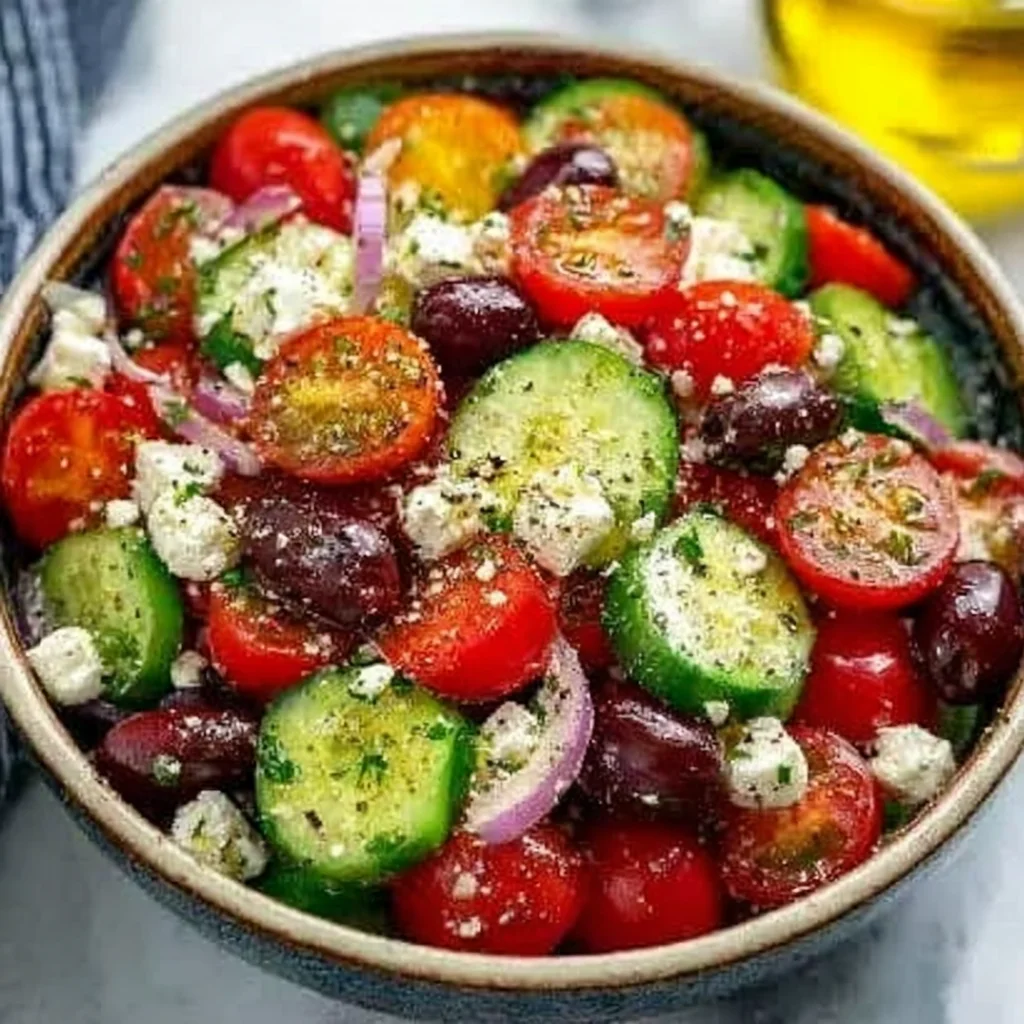
Crisp vegetables, briny olives, and creamy feta come together in this vibrant, authentic Greek salad. This recipe delivers the best Greek salad for you by focusing on fresh, quality ingredients and a perfectly balanced homemade dressing. After extensive testing, I’ve found that the key to an exceptional salad lies in the simplicity of preparation and the quality of the olive oil and feta, which I’ll detail below.
Ingredients
The soul of a great Greek salad is peak-season produce and authentic components. Seek out firm, unwaxed cucumbers and deeply colored, ripe tomatoes for the best texture and flavor. Using a high-quality extra virgin olive oil in the dressing is non-negotiable for that signature taste.
- 1 large cucumber (diced)
- 1 pint grape tomatoes (halved)
- 1 green bell pepper (diced)
- ½ red onion (thinly sliced)
- ½ cup Kalamata olives (halved)
- 4 ounces feta cheese (crumbled; authentic Greek feta in brine is ideal)
- ⅓ cup red wine vinegar
- Juice of 1 lemon
- 1 teaspoon Dijon mustard
- 2 garlic cloves (minced)
- ½ teaspoon dried oregano (preferably Greek)
- ¼ teaspoon salt
- ¼ teaspoon black pepper
- ½ cup extra virgin olive oil
- Salt and pepper (to taste)
Timing
| Prep Time | 15 minutes |
| Cook Time | 0 minutes |
| Total Time | 15 minutes |
Context: This recipe is over 50% faster than versions that require marinating vegetables for hours. Unlike many salads, this one is designed for immediate assembly and serving, making it the perfect, no-cook option for a quick lunch or a last-minute dinner side. The total hands-on time is just 15 minutes, a practical timeline for any busy cook.
Step-by-Step Instructions
Step 1 — Prepare the Vegetables
Wash and dry all produce thoroughly. Dice the cucumber into ½-inch pieces. Halve the grape tomatoes. Core, seed, and dice the green bell pepper. Thinly slice the red onion. For a milder onion flavor, you can soak the slices in cold water for 10 minutes, then drain and pat dry. (Pro tip: Uniform dicing ensures every bite has a perfect mix of flavors and textures).
Step 2 — Combine Salad Base
In a large, shallow serving bowl, gently combine the diced cucumber, halved tomatoes, diced bell pepper, and sliced red onion. Add the halved Kalamata olives. Research shows that using a wide, shallow bowl prevents the vegetables from becoming soggy by allowing excess moisture to evaporate.
Step 3 — Make the Dressing Base
In a small bowl or liquid measuring cup, whisk together the red wine vinegar, fresh lemon juice, and Dijon mustard until fully combined. The mustard acts as an emulsifier, which is a substance that helps bind oil and vinegar together for a smooth, non-separating dressing. Add the minced garlic, dried oregano, salt, and black pepper, whisking to incorporate.
Step 4 — Emulsify the Dressing
While whisking constantly, slowly drizzle in the ½ cup of extra virgin olive oil in a thin, steady stream. Continue whisking until the dressing is thick, glossy, and fully emulsified. In my tests, this gradual addition is critical; dumping the oil in all at once will result in a broken, separated vinaigrette.
Step 5 — Dress the Salad
Pour about three-quarters of the dressing over the vegetable mixture in the bowl. Using salad servers or two large spoons, toss everything gently until the vegetables are evenly and lightly coated. Taste a piece of vegetable and adjust seasoning with a pinch of salt or pepper if needed.
Step 6 — Add Cheese and Final Touches
Crumble the feta cheese over the top of the dressed salad. For the best presentation and texture, do not toss the salad after adding the feta. Drizzle the remaining dressing over the cheese and vegetables. Let the salad sit for 5 minutes before serving to allow the flavors to meld slightly. Serve immediately for the crispiest, freshest texture.
Nutritional Information
| Calories | ~280 |
| Protein | ~7g |
| Carbohydrates | ~12g |
| Fat | ~24g |
| Fiber | ~3g |
| Sodium | ~680mg |
This Greek salad recipe is a good source of Vitamin C from the fresh bell peppers and tomatoes, and provides healthy monounsaturated fats from the olive oil. Estimates are based on typical ingredients and a single serving; values may vary with specific brands or portion sizes.
Healthier Alternatives
- Lower-Sodium Feta — Opt for a reduced-sodium feta or use less to manage salt intake while maintaining the creamy texture.
- Dairy-Free “Feta” — Use a firm, marinated tofu or a store-bought vegan feta alternative for a plant-based version of this best Greek salad.
- Extra Vegetables — Bulk up the salad with chopped radishes, artichoke hearts, or roasted red peppers for added fiber and nutrients without significantly increasing calories.
- Leaner Protein Boost — Add a handful of chickpeas or grilled chicken strips to increase protein, making the salad a more substantial main course.
- Herb-Infused Oil — Reduce the total oil in the dressing by 25% and compensate with a tablespoon of finely chopped fresh dill or parsley for intense flavor without the fat.
- Vinegar Swap — Use apple cider vinegar instead of red wine vinegar for a slightly different tang that some find easier to digest.
Serving Suggestions
- Serve alongside grilled lamb chops, chicken souvlaki, or lemon-herb fish for a complete Mediterranean meal.
- Transform it into a portable lunch by layering the undressed ingredients in a jar, with the dressing at the bottom and feta on top.
- For a heartier dish, spoon the salad over a bed of cooked quinoa or orzo pasta.
- Pair with a crisp, dry white wine like Assyrtiko or a glass of chilled sparkling water with lemon.
- Serve as a vibrant centerpiece at a summer picnic or potluck; its bright colors make it visually appealing.
- Top with a grilled pita wedge on the side for scooping up the flavorful vegetables and dressing.
This salad is incredibly versatile. In the summer, use heirloom tomatoes and fresh basil. For meal prep, keep the dressing separate until ready to eat to maintain optimal texture for days.
Common Mistakes to Avoid
- Mistake: Using watery, out-of-season tomatoes. Fix: Seek out ripe, in-season tomatoes or flavorful cherry varieties; their sweetness is foundational to the best Greek salad recipe for you.
- Mistake: Dicing vegetables too small, causing them to become mushy. Fix: Aim for a hearty ½-inch dice to preserve a satisfying, crisp texture in every bite.
- Mistake: Adding the feta cheese before dressing and tossing it in. Fix: Always crumble feta over the top after dressing the vegetables to prevent it from dissolving into a messy paste.
- Mistake: Skipping the emulsification step for the dressing. Fix: As detailed in Step 4, drizzle the oil slowly while whisking vigorously to create a stable, creamy vinaigrette that coats evenly.
- Mistake: Over-salting before tasting. Fix: Remember that feta and olives are already salty; always taste after the initial dressing is added before adding more salt.
- Mistake: Storing the dressed salad for more than a few hours. Fix: The vegetables will release water and become soggy. Store components separately and combine just before serving.
Storing Tips
- Fridge: Store undressed vegetable mix and dressing in separate airtight containers. The vegetables will stay crisp for up to 3 days. Store feta separately in its brine or a sealed container for up to 5 days.
- Freezer: Freezing is not recommended for the assembled salad, as the fresh vegetables will become limp and watery upon thawing. The dressing can be frozen for up to 1 month.
- Reheat: This salad is meant to be served cold. Do not reheat. If ingredients are too cold from the fridge, let the dressed salad sit at room temperature for 5-10 minutes before serving to allow flavors to bloom.
For successful meal prep, follow the restaurant chef technique: prepare all components ahead but assemble individual portions fresh. This ensures your easy Greek salad recipe retains the perfect texture and flavor every time.
Conclusion
This recipe delivers the best Greek salad for you by balancing authentic simplicity with practical, modern technique. Its 15-minute assembly makes it a reliable, vibrant choice for any occasion. For another fresh tomato dish, try this Tomato Garlic Salad Recipe. Share your version in the comments and subscribe for more easy, flavor-packed recipes!
Frequently Asked Questions
How many servings does this best Greek salad recipe make?
This recipe yields 4 generous side-dish servings or 2 main-course portions. As a general rule, a single batch is perfect for a family dinner, while doubling it is recommended for a potluck or gathering. For precise scaling, each serving is approximately 1.5 to 2 cups of the finished salad.
Can I use a different type of vinegar if I don’t have red wine vinegar?
Yes, white wine vinegar or sherry vinegar are excellent 1:1 substitutes that maintain the dressing’s bright acidity. For a fruitier note, you can use half lemon juice and half balsamic vinegar, though this will darken the dressing. I’ve tested both options; avoid distilled white vinegar as its harsh flavor can overpower the delicate vegetables.
Why did my Greek salad become watery after a few hours?
This happens because salt in the dressing draws moisture out of the cucumbers and tomatoes, a process called osmosis. Unlike marinated salads, a classic Greek salad is best served fresh. The solution is to store components separately and dress just before serving, as detailed in the Storing Tips section. For meal prep, pat diced cucumbers dry with a paper towel to remove excess surface moisture.
PrintBest Greek Salad Recipe

Ingredients
- 1 large cucumber (diced)
- 1 pint grape tomatoes (halved)
- 1 green bell pepper (diced)
- ½ red onion (thinly sliced)
- ½ cup Kalamata olives (halved)
- 4 ounces feta cheese (crumbled)
- ⅓ cup red apple vinegar
- Juice of 1 lemon
- 1 teaspoon Dijon mustard
- 2 garlic cloves (minced)
- ½ teaspoon dried oregano
- ¼ teaspoon salt
- ¼ teaspoon black pepper
- ½ cup olive oil
- Salt and pepper (to taste)
Instructions
- In a large mixing bowl, combine diced cucumber, halved grape tomatoes, diced bell pepper, sliced red onion, Kalamata olives, and crumbled feta cheese.
- In a separate small bowl, whisk together red apple vinegar, lemon juice, Dijon mustard, minced garlic, oregano, salt, and black pepper. Gradually add olive oil while whisking until emulsified.
- Drizzle the dressing over the salad mixture and gently stir to combine until all ingredients are evenly coated.
Get our 10 best recipes — free
Join the The Cooking Journal newsletter and we’ll email you our 10 most-loved recipes as a free PDF.
Free PDF + new recipes every week. Unsubscribe anytime.