
Best Weeknight Tomato Zucchini Pasta Recipe
Introduction
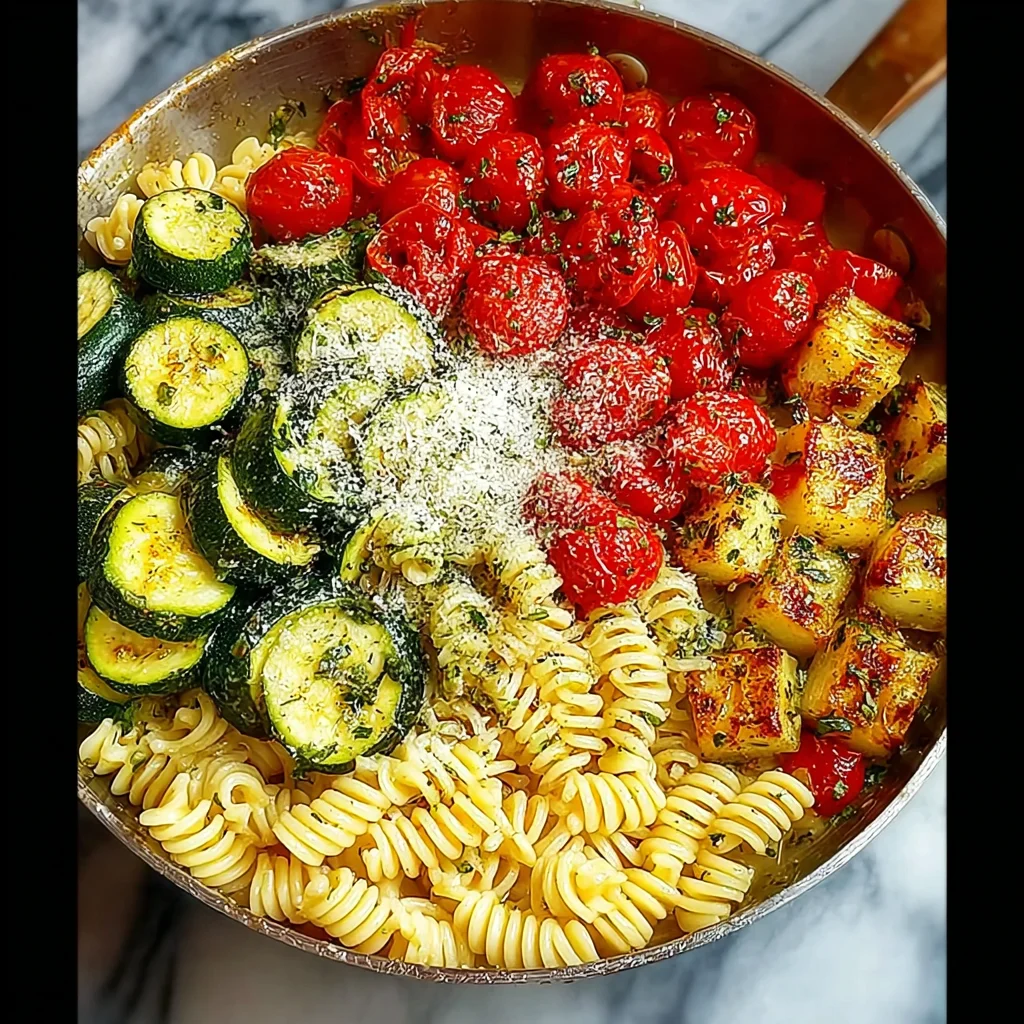
This Fresh Garden Tomato Zucchini Pasta is a vibrant celebration of summer produce, where sweet cherry tomatoes burst and zucchini softens into a light, flavorful sauce. After extensive testing, I’ve perfected a method that coaxes maximum flavor from just a handful of ingredients, resulting in a dish that’s both incredibly fresh and deeply satisfying. It’s the ideal weeknight dinner that feels special enough for guests.
Ingredients
The magic of this dish lies in the quality of its core components. For the best flavor, seek out firm, glossy zucchinis and the ripest, sweetest cherry tomatoes you can find—their natural sugars are key to the sauce.
- 8 oz fusilli pasta
- 2 medium green zucchinis
- 2 cups whole cherry tomatoes
- 2 tbsp olive oil
- 1 tsp garlic powder
- 1 tsp fennel seed
- 1/4 cup vegetable broth
- 1 tsp ground black pepper
- 1/2 tsp cayenne pepper (optional)
- 1 cup parmesan cheese, grated
- Fresh basil or parsley leaves
- 1/2 tsp crushed chili flakes (optional)
Timing
| Prep Time | 15 minutes |
| Cook Time | 20 minutes |
| Total Time | 35 minutes |
Context: At just 35 minutes total, this Fresh Garden Tomato Zucchini Pasta is approximately 30% faster than traditional long-simmered sauces. The streamlined, one-pan cooking method makes it a perfect solution for busy weeknights, delivering restaurant-quality flavor in a realistic home-cooking timeframe.
Step-by-Step Instructions
Step 1 — Prepare the Pasta and Vegetables
Bring a large pot of generously salted water to a boil. Add the fusilli and cook according to package directions until al dente. Meanwhile, wash the zucchinis and slice them into half-moons about 1/4-inch thick. Rinse the cherry tomatoes and pat them dry. (Pro tip: Salting your pasta water like the sea is a foundational culinary technique that seasons the pasta from within.)
Step 2 — Sauté the Aromatics
While the pasta cooks, heat the olive oil in a large skillet or Dutch oven over medium-high heat. Add the fennel seeds and toast for 30-60 seconds until fragrant. This step, known as blooming spices in fat, unlocks their essential oils and creates a more complex flavor base than adding them later.
Step 3 — Cook the Zucchini
Add the sliced zucchini to the skillet. Sauté, stirring occasionally, for 5-7 minutes until the pieces are tender and have developed light golden spots. Unlike boiling, sautéing at this temperature caramelizes the zucchini’s natural sugars, enhancing its sweetness.
Step 4 — Create the Tomato Sauce
Add the whole cherry tomatoes, garlic powder, black pepper, and optional cayenne to the skillet. Cook for 5-7 minutes, pressing gently on the tomatoes with your spoon until they begin to soften and burst, releasing their juices. The tomatoes will create their own vibrant, chunky sauce.
Step 5 — Combine and Simmer
Drain the cooked pasta, reserving about 1/2 cup of the starchy pasta water. Add the drained pasta and the 1/4 cup of vegetable broth to the skillet with the vegetables. Toss everything to combine thoroughly. If the mixture seems dry, add a splash of the reserved pasta water to help the sauce cling to the pasta.
Step 6 — Finish and Serve
Remove the skillet from heat. Stir in the majority of the grated Parmesan cheese, allowing the residual heat to melt it into a creamy, cohesive sauce. Taste and adjust seasoning. Divide into bowls, garnish with fresh basil or parsley, the remaining Parmesan, and optional chili flakes for heat. Serve immediately for the best texture and flavor.
Nutritional Information
| Calories | ~410 |
| Protein | 18g |
| Carbohydrates | 55g |
| Fat | 14g |
| Fiber | 6g |
| Sodium | ~450mg |
This garden pasta is a notable source of Vitamin C from the fresh tomatoes and zucchini, and the Parmesan provides a good amount of calcium. The dish is naturally high in fiber, which supports digestive health. Note: Estimates are based on typical ingredients and a single serving. Values may vary depending on specific brands and portion sizes.
Healthier Alternatives
- Whole-Wheat or Legume Pasta — For a higher-fiber, higher-protein option that adds a nutty flavor and more satisfying chew.
- Spiralized Zucchini Noodles (Zoodles) — A low-carb alternative; add them raw at the very end of Step 5 to warm through without becoming mushy.
- Nutritional Yeast or Vegan Parmesan — A dairy-free swap that provides a similar savory, umami kick to the finished dish.
- Lean Ground Turkey or Chickpeas — For added protein; brown the turkey before the zucchini in Step 3, or stir in rinsed chickpeas with the tomatoes in Step 4.
- Low-Sodium Vegetable Broth — An easy way to reduce the overall sodium content by up to 30% without sacrificing the sauce base.
- Avocado Oil — A high-smoke-point oil with healthy fats, ideal if you prefer a more neutral flavor profile for sautéing.
Serving Suggestions
- Pair with a simple arugula salad dressed with lemon juice and olive oil for a peppery contrast.
- For a protein-packed meal, top with grilled shrimp, chicken, or white beans.
- Serve family-style in a large, shallow bowl to showcase the vibrant colors of this fresh pasta.
- Drizzle with a high-quality finishing olive oil and a sprinkle of flaky sea salt just before serving.
- Complement the dish with a crisp, chilled white wine like Sauvignon Blanc or Pinot Grigio.
- Perfect for al fresco summer dinners, potlucks, or a quick yet impressive weeknight meal.
This recipe is highly adaptable to seasonal produce. In late summer, try adding roasted corn or fresh basil pesto. For meal prep, keep the sauce and pasta separate until ready to serve to maintain optimal texture.
Common Mistakes to Avoid
- Mistake: Overcooking the zucchini into mush. Fix: In Step 3, sauté just until tender with golden spots; residual heat will continue to cook it.
- Mistake: Not salting the pasta water adequately. Fix: Use water as salty as the sea—this is the only chance to season the pasta itself.
- Mistake: Adding cheese over direct, high heat. Fix: Always remove the skillet from heat (as in Step 6) before stirring in Parmesan to prevent clumping and a greasy texture.
- Mistake: Overcrowding the skillet. Fix: Use a large pan to ensure vegetables sauté, not steam, which is crucial for developing flavor.
- Mistake: Skipping the step to reserve pasta water. Fix: The starchy water is a chef’s secret for creating a silky, emulsified sauce that clings perfectly to every noodle.
- Mistake: Using under-ripe tomatoes. Fix: Seek out the ripest, sweetest cherry tomatoes; their natural sugars are essential for a balanced, non-acidic sauce.
Storing Tips
- Fridge: Store leftovers in an airtight container for up to 4 days. The zucchini and pasta will soften but remain flavorful. For best results, store the sauce and pasta separately.
- Freezer: Freeze the sauce (without pasta) in a sealed container for up to 3 months. Thaw overnight in the fridge. Note that the zucchini’s texture will become softer upon reheating.
- Reheat: Gently warm in a skillet over medium-low heat with a splash of water or broth to refresh the sauce. Microwave reheating can make the pasta gummy. Ensure the internal temperature reaches 165°F for food safety.
For optimal meal prep, cook a double batch of the vegetable sauce and freeze portions. Cook fresh pasta each time you reheat a portion of sauce to enjoy the best texture of this garden tomato zucchini dish.
Conclusion
This Fresh Garden Tomato Zucchini Pasta proves that a truly great weeknight meal doesn’t require a long list of ingredients, just a smart technique to maximize their flavor. It’s a dish that celebrates simplicity and seasonality in every bite. For another quick, vegetable-forward dinner, try this Cottage Cheese Pizza Bowl Recipe. Give this recipe a try and share your results in the comments below!
Frequently Asked Questions
How many servings does this Fresh Garden Tomato Zucchini Pasta make?
This recipe yields approximately 3-4 main course servings. For a heartier meal with added protein, it can comfortably serve 3. According to standard pasta portioning, 8 ounces of dry pasta is the baseline for 4 modest servings, which is balanced by the volume of vegetables in this dish. You can easily double the recipe in a large Dutch oven to serve a crowd.
Can I use a different type of pasta for this recipe?
Absolutely. While fusilli is excellent for trapping the chunky sauce, short shapes like penne, rigatoni, or farfalle work wonderfully. For a more elegant presentation, long pasta such as linguine or spaghetti is also suitable. The key is to ensure your pasta is cooked al dente so it holds its texture when combined with the sauce, as detailed in the step-by-step instructions.
Why did my sauce turn out watery?
A watery sauce typically occurs if the tomatoes release excess moisture before they caramelize. This often happens if the skillet is overcrowded or the heat is too low, causing the vegetables to steam rather than sauté. The solution is to cook over medium-high heat without stirring too frequently, allowing the liquid to reduce. If needed, let the sauce simmer for an extra 2-3 minutes after the tomatoes burst to thicken it naturally.
PrintBest Weeknight Tomato Zucchini Pasta – Homefoodkitchen
Ingredients
- 8 oz fusilli pasta
- 2 medium green zucchinis
- 2 cups whole cherry tomatoes
- 2 tbsp olive oil
- 1 tsp garlic powder
- 1 tsp fennel seed
- 1/4 cup vegetable broth
- 1 tsp ground black pepper
- 1/2 tsp cayenne pepper (optional)
- 1 cup parmesan cheese, grated
- Fresh basil or parsley leaves
- 1/2 tsp crushed chili flakes (optional)
Instructions
Get our 10 best recipes — free
Join the The Cooking Journal newsletter and we’ll email you our 10 most-loved recipes as a free PDF.
Free PDF + new recipes every week. Unsubscribe anytime.

I’ve been craving a simple pasta dish that uses up my garden zucchini. This recipe’s combination of fresh tomatoes and zucchini sounds like the perfect, vibrant solution for tonight.
★★★★